
Plating Assemblies with Dissimilar Metals: Galvanic Corrosion Prevention
What happens when you weld steel to copper and drop it in a plating tank? Learn how to plate brazed and welded assemblies containing dissimilar metals without causing galvanic destruction.
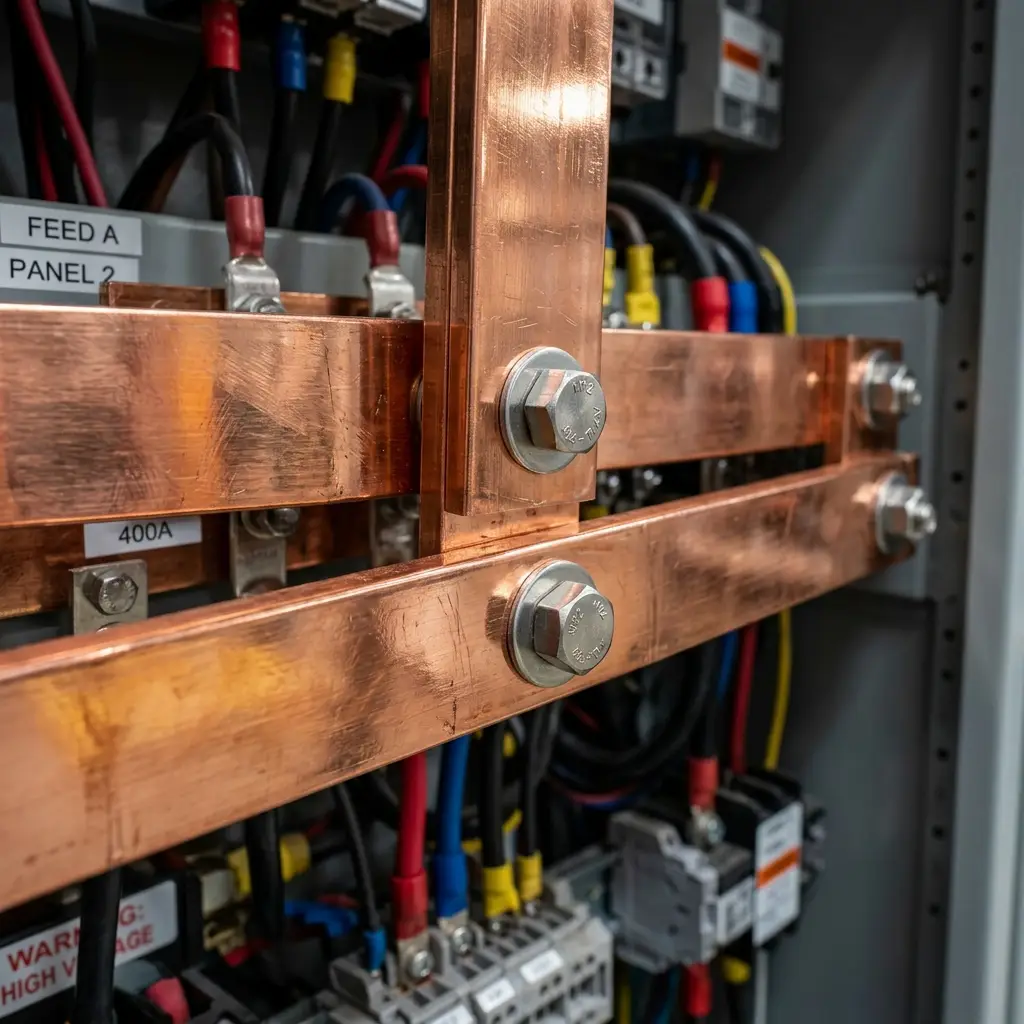
Electroplating a single piece of machined steel is straightforward. Plating a solid piece of copper is easy.
But what happens when an engineer designs a heavy-duty electrical switchgear component consisting of a thick copper busbar firmly silver-brazed to a structural steel mounting bracket?
When you place an assembly made of two different metals into an electrically conductive chemical bath (an electrolyte), you have just built a battery. This creates massive challenges in the pre-treatment and plating lines, often resulting in severe galvanic corrosion, blistering, and destroyed parts before the current is even turned on.
Here is how the finishing industry handles the nightmare of dissimilar metal assemblies.
The Galvanic Cell Problem
When two dissimilar metals (e.g., steel and copper) are in physical contact and submerged in an electrolyte (like an acid pickle or a cleaning tank), a galvanic cell is formed.
Metals have different electrochemical potentials. In a galvanic cell, the more “active” (anodic) metal will rapidly sacrifice itself to protect the more “noble” (cathodic) metal.
- Copper is noble (cathodic).
- Steel is active (anodic).
The Destruction in the Acid Pickle
When a steel/copper brazed assembly is dropped into a standard Hydrochloric Acid (HCl) pickle to remove rust and brazing flux:
- A massive electrical current begins flowing between the copper and the steel through the acid.
- The copper forces the steel to become the anode.
- The steel immediately adjacent to the copper braze joint is aggressively attacked and dissolved by the acid at an artificially accelerated rate.
- The result is deep pitting, severe etching, and a weakened structural joint on the steel side.
Furthermore, any copper that does dissolve into the acid will immediately plate out as a loose, powdery “immersion deposit” onto the steel, completely ruining subsequent plating adhesion.
How to Pre-Treat Dissimilar Assemblies
You cannot use standard cleaning lines for dissimilar metal assemblies. The chemistry and the electrical currents must be carefully manipulated.
1. Avoid Anodic Electrocleaning
As discussed in previous guides, steel is usually cleaned anodically (reverse current). If you put a copper/steel assembly into an anodic electrocleaner, the copper will rapidly oxidize, turn black, and potentially dissolve, ruining the electrical contact surface.
- The Solution: Assemblies must be cleaned using heavy-duty hot alkaline soak cleaners (no electricity), followed by very brief, highly controlled cathodic (direct current) electrocleaning to avoid oxidizing the copper.
2. Specialized Acid Pickling
You cannot leave a steel/copper assembly in a strong HCl pickle. The galvanic attack will destroy the steel.
- The Solution: The use of specialized, proprietary acid salts containing fluoride inhibitors. These acids are formulated to quickly dissolve brazing fluxes and heat scale without aggressively attacking the base metals or allowing immersion deposits. The immersion time must be kept as short as absolutely possible.
The Plating Solution: The Neutralizing Strike
Even if you successfully clean and pickle the assembly without destroying the steel, you face the final hurdle: entering the plating tank.
If you drop a copper/steel assembly into an Acid Tin or Acid Copper bath, the steel will instantly react, forming a loose immersion deposit. If you drop it into a highly alkaline bath, the copper may suffer.
The universal solution to plating dissimilar metal assemblies is the Strike Layer.
Before the assembly goes into the final functional plating bath, the entire part must be quickly coated in a single, unifying layer of metal that is compatible with both the steel and the copper. This neutralizes the galvanic cell because the assembly is now functionally made of one single metal.
The Cyanide Copper Strike
This is the most common and effective method. The assembly is submerged in an Alkaline Cyanide Copper bath with the power already on (“live entry”). A high initial current quickly deposits a 1-2 \mum layer of copper over the entire steel and copper assembly.
- The alkaline bath does not cause immersion deposits on the steel.
- The entire part is now essentially a single piece of copper.
- The galvanic cell is dead. The part can now safely be transferred to an Acid Tin, Silver, or Nickel bath to receive its final heavy functional coating.
The Woods Nickel Strike
For assemblies involving Stainless Steel welded to Copper, the Copper Strike is ineffective (it won’t stick to the stainless). The assembly must go through a highly acidic Woods Nickel Strike to activate the stainless steel and lay down a unifying layer of active nickel over the entire part before final plating.
Design Rules for Engineers
If you must design a brazed or welded assembly containing dissimilar metals:
- Minimize Flux: Ensure your brazing operation uses the minimum amount of flux necessary. Hard, glassy flux residue is incredibly difficult for a plater to remove without aggressive acids that will trigger galvanic corrosion. Consider mechanical blasting to remove flux before sending parts to the plater.
- Consult Before Plating: Do not simply put “Tin Plate” on the drawing. Specify the base metals clearly (e.g., “Assembly: C110 Copper brazed to 1018 Steel”). A good plating shop will see this and automatically route the part through a specialized pre-treatment and strike line.
Processing complex assemblies requires deep metallurgical expertise. At Platinex Industries, our engineers specialize in the pre-treatment and precision plating of heavy copper-to-steel switchgear and busbar assemblies. Contact us to ensure your brazed components are finished flawlessly.