
Plating High-Strength Steel (Grade 10.9/12.9): Embrittlement Risks
High-tensile steel fasteners are the backbone of heavy machinery, but they are uniquely vulnerable to catastrophic failure when electroplated. Learn the strict baking requirements for Grade 10.9 and 12.9 steel.
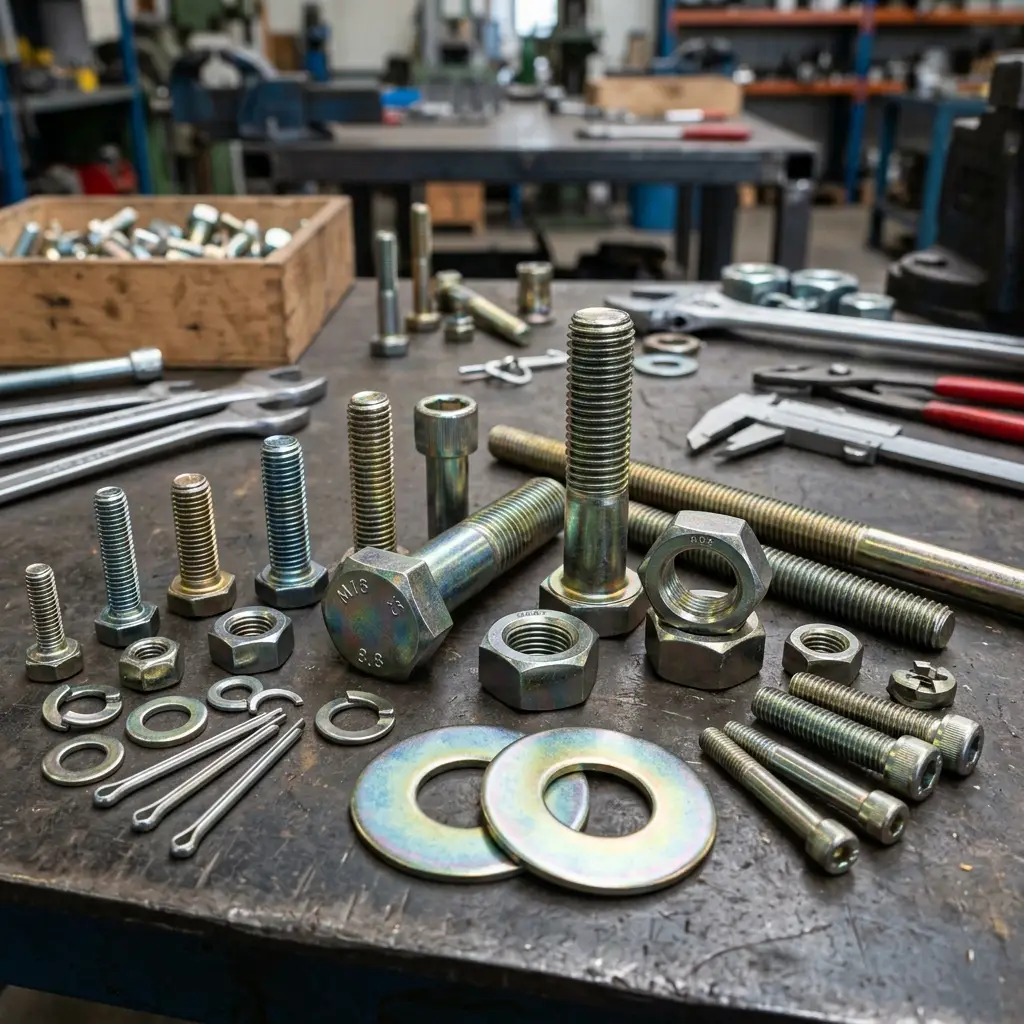
A 20,000 tractor engine is assembled using beautifully zinc-plated Grade 12.9 high-strength cylinder head bolts. The bolts are torqued precisely to specification. The engine sits in the factory overnight. The next morning, without the engine ever being turned on, three of the bolt heads have snapped cleanly off, lying on the floor.
This scenario is the nightmare of every mechanical engineer and quality control manager. The failure was not caused by a flawed steel casting or over-torquing. It was caused by the electroplating process.
The culprit is Hydrogen Embrittlement. When dealing with high-tensile steel, electroplating becomes a delicate balance between corrosion protection and structural integrity.
The Metallurgy of High-Strength Steel
The susceptibility of steel to hydrogen embrittlement is directly proportional to its hardness and tensile strength.
- Mild Steel (e.g., Grade 4.8 / 1018 steel): Has a relatively soft, forgiving crystalline structure. It can absorb massive amounts of hydrogen during plating with absolutely no structural consequences.
- High-Strength Steel (Grade 10.9, 12.9, or hardness > 32 HRC): To achieve this strength, the steel is heat-treated (quenched and tempered), creating a tight, highly stressed, martensitic crystalline lattice. This structure is extremely strong, but it is not forgiving.
How the Hydrogen Attacks
During the electroplating process—specifically during the acid pickling stage and the actual cathodic plating stage—atomic hydrogen (H⁺) is generated at the surface of the steel.
Because atomic hydrogen is the smallest atom in the universe, it easily diffuses into the tight crystalline lattice of the high-strength steel. It seeks out areas of high internal stress (like the root of a thread or the underside of a bolt head). Once there, the atomic hydrogen recombines into hydrogen gas (H_2). This creates immense internal pressure on an already highly stressed, unforgiving lattice.
When external torque is applied to the bolt, the combined external stress and internal gas pressure exceed the yield strength of the steel, resulting in a sudden, catastrophic, brittle fracture. There is no yielding or stretching; the bolt simply snaps.
The Cure: Post-Plate Baking
You cannot electroplate steel without generating hydrogen. Therefore, if you must electroplate a high-strength part, you must remove the hydrogen after plating but before the part is placed under mechanical load.
This is achieved through Post-Plate Baking (Hydrogen Embrittlement Relief).
The parts are placed into a calibrated industrial oven immediately after leaving the plating tank. The heat increases the kinetic energy of the trapped hydrogen atoms, forcing them to diffuse back out of the steel and harmlessly into the atmosphere.
The Strict Rules of Baking (per ASTM B850 / ISO 4042)
- Time is Critical: The baking must commence immediately after plating. The industry standard is that high-strength parts must be in the oven within 1 to 4 hours of leaving the plating bath. If you wait 24 hours to bake a Grade 12.9 bolt, the micro-cracking has already begun, and baking will not save it.
- Temperature: Typically 190°\textC to 220°\textC (375°\textF - 430°\textF).
- Duration: The baking time is dictated by the tensile strength.
- Moderate strength (e.g., 32-39 HRC): 4 to 8 hours.
- High strength (e.g., Grade 10.9 / 39-44 HRC): 8 to 14 hours.
- Ultra-high strength (e.g., Grade 12.9 / >44 HRC): 24 hours minimum.
The Passivation Trap
Remember that modern zinc plating requires a Trivalent Passivation layer (clear, yellow, or black) for corrosion resistance. If you bake a part after applying the passivation, the 200°\textC heat will completely destroy the passivation layer, ruining the corrosion protection. Therefore, the sequence must be: Electroplate \rightarrow Bake \rightarrow Reactivate \rightarrow Passivate. This interrupts the normal plating line flow and requires manual handling, which is why baking adds significant cost to the finishing process.
Alternatives to Electroplating High-Tensile Steel
Because the risk of catastrophic failure is so high (and the liability so massive), many automotive OEMs forbid the electroplating of Grade 12.9 fasteners entirely.
If electroplating is too risky, what are the alternatives for protecting high-strength steel?
- Zinc Flake Coatings (Geomet / Dacromet): This is the modern automotive standard for high-strength bolts. It is a non-electrolytic, dip-spin paint process. Because there is no acid cleaning and no electrical current, zero hydrogen is generated. It provides exceptional corrosion resistance with zero risk of embrittlement.
- Mechanical Galvanizing: Zinc powder is cold-welded to the steel parts by tumbling them in a barrel with glass beads. Again, no electrical current, meaning vastly reduced embrittlement risk.
- Hot Black Oxide (Oiled): A chemical conversion coating that generates no hydrogen. However, it provides very little corrosion resistance and is only suitable for well-oiled internal engine or gearbox applications.
At Platinex Industries, we adhere to strict ASTM B850 baking protocols for all high-tensile components. However, for critical Grade 12.9 applications, we highly recommend consulting with our engineering team to explore non-electrolytic alternatives like Zinc Flake coatings.