
Can You Electroplate Aluminium? The Zincate Process Explained
Aluminium is one of the most challenging substrates to electroplate. This guide explains why, and how the zincate double-dip process makes reliable plating on aluminium possible for engineering applications.
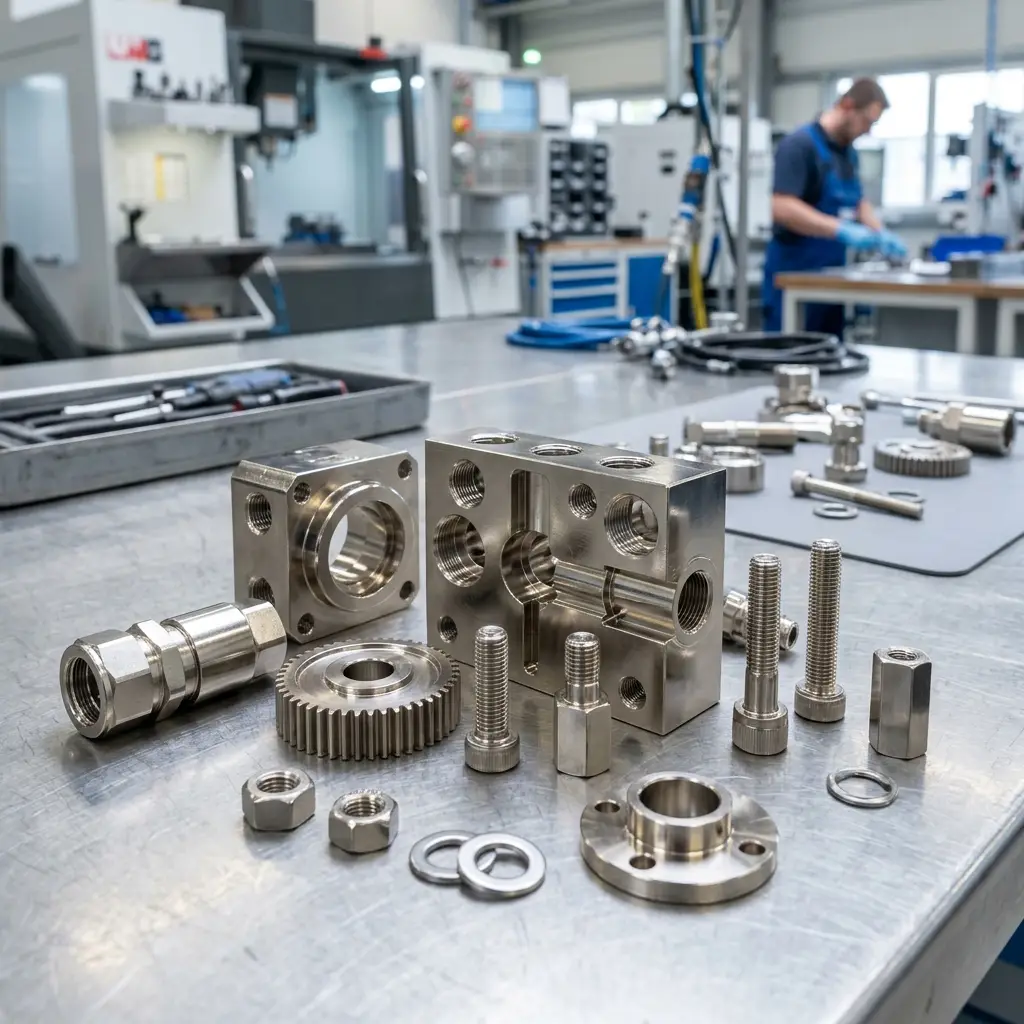
Aluminium alloys — the backbone of aerospace structures, automotive castings, and electronic enclosures — present a fundamental problem for electroplating: aluminium’s natural oxide layer makes it nearly impossible to plate directly. Engineers frequently ask whether their aluminium component can be plated, and the answer is yes, but only if the correct pre-treatment sequence is used. Skip a step, rush the process, or use the wrong chemistry, and the plating will simply peel off in the field.
This guide explains the science behind why aluminium is difficult to plate and how the zincate process overcomes these challenges.
Why Aluminium Is Difficult to Plate
The Oxide Problem
Aluminium reacts instantly with atmospheric oxygen to form a thin, tenacious aluminium oxide (Al₂O₃) layer — typically 2–10 nm thick within seconds of freshly exposing the metal. This oxide layer is:
- Electrically insulating — it prevents current flow between the substrate and the plating bath
- Chemically stable — it resists dissolution in most standard pre-treatment baths
- Self-healing — remove it, and it reforms within milliseconds in air
Standard plating pre-treatments (acid activation, cathodic cleaning) either fail to remove aluminium oxide or cause the oxide to immediately reform during the transfer from cleaning to plating tank.
The Galvanic Displacement Problem
Even if the oxide is momentarily removed, placing aluminium in a plating bath containing dissolved metal ions (copper, nickel) causes an immediate galvanic displacement reaction. Aluminium is highly anodic and will sacrifice itself to reduce copper or nickel ions:
Al⁰ → Al³⁺ + 3e⁻ (aluminium dissolves) Cu²⁺ + 2e⁻ → Cu⁰ (copper deposits by displacement)
The resulting displaced metal deposit is loose, powdery, and completely non-adherent. This is the immersion deposit that looks like plating but has zero adhesion. Apply any mechanical force, and it flakes off immediately.
The Zincate Process: The Engineering Solution
The zincate (or zinc immersion) process was developed specifically to solve the aluminium plating adhesion problem. It is now the universal standard pre-treatment for electroplating on aluminium alloys.
Zincate Chemistry
The zincate solution is a strongly alkaline (NaOH or KOH, pH > 13) bath containing dissolved zinc oxide or zinc sulfate. When aluminium is immersed:
- The alkaline solution dissolves the aluminium oxide: Al₂O₃ + 2NaOH → 2NaAlO₂ + H₂O
- Simultaneously, a thin layer of metallic zinc deposits by displacement: Zn²⁺ + 2e⁻ → Zn⁰ (as Al dissolves and provides electrons)
- This zinc layer immediately covers the freshly exposed aluminium, preventing oxide reformation
The result is a thin (0.5–2 µm), adherent zinc film directly bonded to the oxide-free aluminium surface.
Why Double Zincate (Two-Step) Is Critical
A single zincate dip leaves a coarse, granular zinc deposit. While it provides a metallic surface for subsequent plating, the adhesion strength is marginal for demanding applications.
The double zincate process — strip and repeat — is the industry standard:
| Step | Process | Purpose |
|---|---|---|
| 1 | Degrease (alkaline cleaner) | Remove oils, machining fluids |
| 2 | Rinse | Prevent contamination carry-over |
| 3 | Etch (NaOH, 60°C, 30–60 sec) | Remove bulk oxide, reveal clean Al |
| 4 | Rinse | |
| 5 | De-smut (HNO₃ or mixed acid) | Remove alloying element smut layer |
| 6 | Rinse | |
| 7 | First Zincate (60–90 sec) | Deposit coarse zinc film |
| 8 | Rinse | |
| 9 | Nitric Acid Strip (HNO₃ 50%) | Strip first zincate completely |
| 10 | Rinse | |
| 11 | Second Zincate (30–45 sec) | Deposit fine-grained, adherent zinc |
| 12 | Rinse | |
| 13 | Transfer immediately to plating | No air exposure allowed |
The stripping of the first zincate in nitric acid is critical. It removes the coarse first deposit and any residual smut or contamination, exposing an even cleaner aluminium surface. The second zincate deposits a much finer-grained, more adherent zinc layer because the aluminium surface beneath it is now pristine.
Alloy-Specific Behaviour
Not all aluminium alloys respond equally to the zincate process. The alloying elements significantly affect behaviour:
| Alloy Series | Main Alloying Element | Zincate Behaviour | Difficulty |
|---|---|---|---|
| 1xxx (pure Al) | None | Excellent zincate | Easy |
| 2xxx | Copper | Copper-rich smut — must de-smut thoroughly | Moderate |
| 3xxx | Manganese | Good zincate | Easy |
| 4xxx | Silicon | Silicon smut — very difficult | Hard |
| 5xxx | Magnesium | Good zincate | Moderate |
| 6061, 6063 (6xxx) | Mg + Si | Most common engineering alloy — good results | Moderate |
| 7xxx | Zinc | Zinc-rich smut — complex pre-treatment | Hard |
6061-T6 is the most commonly plated aluminium alloy in India for structural and automotive applications, and the standard double zincate process works well on it with proper de-smut. Silicon-containing alloys (4xxx series, casting alloys like A380) are the most challenging.
What Can Be Plated Over Zincate
Once a good zincate layer is established, the subsequent plating system builds on top of it:
Recommended sequences for aluminium:
| Application | Plating Stack |
|---|---|
| Electrical conductivity (bus bars) | Zincate → Cu strike → Ag or Sn |
| Corrosion protection | Zincate → Electroless Ni or Zn |
| Hard wear surface | Zincate → Cu strike → ENP (heat treated) |
| Decorative chrome | Zincate → Cu strike → Ni → Cr |
| Solderability | Zincate → Cu strike → Sn |
Do not plate zinc electrolytically directly over zincate — the alkaline zinc bath will attack and dissolve the zincate layer before it can build up. Use electroless nickel or a copper strike as the first electroplated layer.
Adhesion Testing
The adhesion of a plated coating on aluminium is verified by:
Bend Test (ASTM B571): The plated aluminium is bent 180° around a mandrel. No peeling or flaking = pass. This is the standard acceptance test for plated aluminium in production environments.
Cross-Hatch Adhesion Test (ISO 2409): A grid of cuts is made through the coating, adhesive tape is pressed and peeled. Retention > 95% of the grid squares = pass.
At Platinex, we perform bend testing on witness panels for every aluminium plating batch, with results documented in the batch quality record.
Frequently Asked Questions
Can you zincate cast aluminium (A380, LM6)? Yes, but it requires modified zincate chemistry (often with added metal ions — copper, nickel, iron) and more aggressive de-smut to handle silicon-rich surfaces. High-silicon casting alloys are among the most difficult aluminium substrates to plate reliably. The success rate depends heavily on process discipline and the specific alloy composition.
Is anodising better than zincate + plating for aluminium? They serve different purposes. Anodising creates a ceramic aluminium oxide layer — excellent for corrosion protection, dyeable for aesthetics, but electrically insulating. Zincate + copper/silver plating provides an electrically conductive surface on aluminium. The correct choice depends entirely on the application requirement.
Why does my aluminium plating peel after 6 months of service? Most post-service peeling on aluminium plated parts is due to a failed zincate process: insufficient de-smut before first zincate, inadequate double-dip sequence, or air exposure between zincate and plating. Sometimes it is thermal cycling — if the coefficient of thermal expansion mismatch between the plating stack and aluminium substrate is too large, cyclic stress at the interface accumulates until delamination occurs.
Can anodised aluminium be plated? No — not without first stripping the anodising. The anodised layer must be completely removed using caustic soda solution, then the standard zincate process applied to the freshly etched aluminium surface.
Need electroplating on aluminium bus bars, heat sinks, or structural components in Nashik? Contact Platinex — our engineering team will assess your alloy and specify the correct zincate and plating sequence.