
Trivalent vs. Hexavalent Zinc Plating: The Complete 2026 Compliance Guide
A comprehensive engineering breakdown of trivalent vs. hexavalent zinc plating, including RoHS compliance, corrosion resistance metrics, and transition strategies.
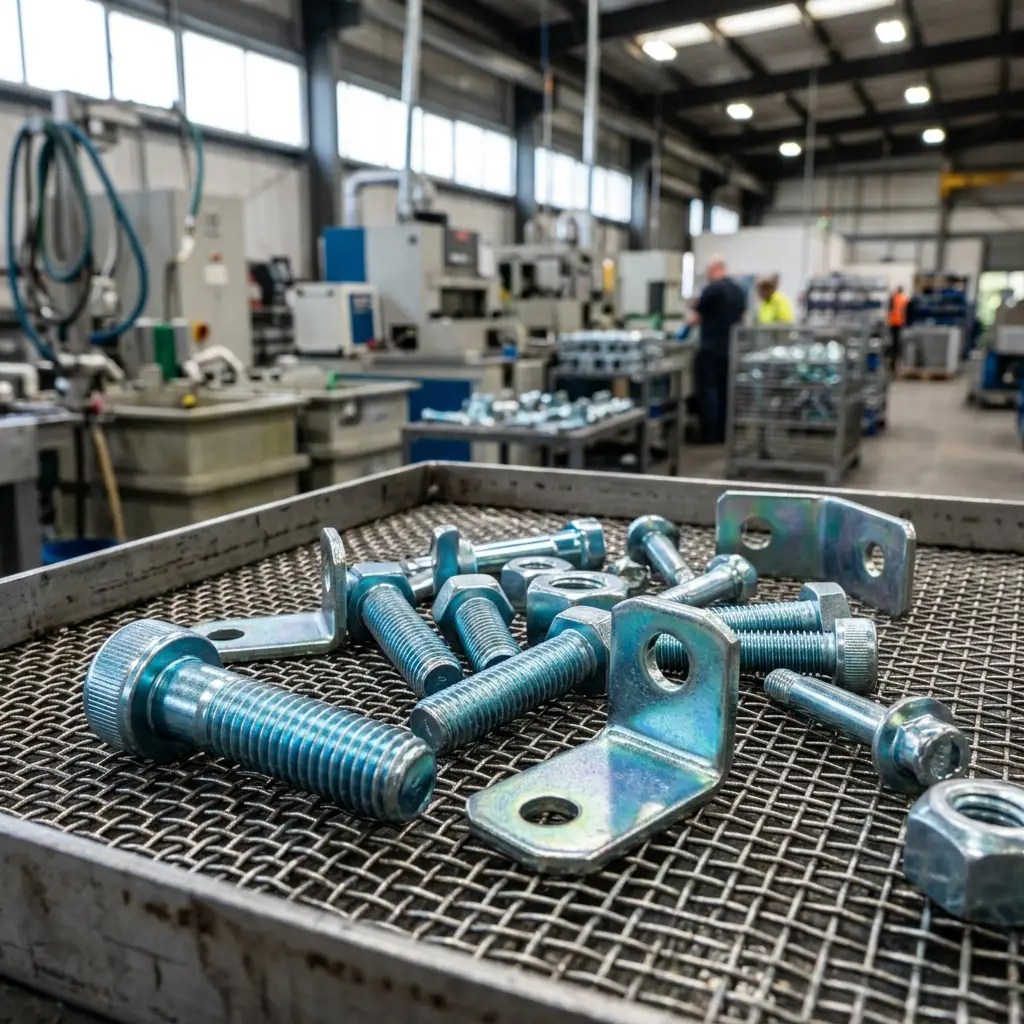
For decades, hexavalent chromium (Cr(VI)) was the undisputed king of conversion coatings in the zinc plating industry. It offered unparalleled corrosion protection, self-healing properties, and a distinct yellow-iridescent finish. However, as global environmental and health regulations have tightened—most notably with the European Union’s RoHS (Restriction of Hazardous Substances) directive—the manufacturing world has been forced to pivot.
Enter trivalent chromium (Cr(III)). Once considered an inferior substitute, modern trivalent zinc plating has evolved into a high-performance, fully compliant alternative that meets, and often exceeds, the standards set by its toxic predecessor.
In this comprehensive guide, we break down the engineering differences, performance metrics, and compliance requirements for trivalent vs. hexavalent zinc plating in 2026.
The Chemistry: Why Hexavalent is Being Phased Out
The Hexavalent (Cr6+) Problem
Hexavalent chromium is highly toxic and a known human carcinogen. During the plating and passivation process, workers are exposed to hazardous fumes. Furthermore, the disposal of hexavalent waste requires extensive, costly treatment to prevent environmental contamination. Regulatory bodies globally, including those overseeing manufacturing in India, have increasingly restricted its use.
The Trivalent (Cr3+) Solution
Trivalent chromium is a naturally occurring, stable state of chromium. It is significantly less toxic, making the plating process safer for operators and drastically reducing the environmental impact of wastewater disposal. Early trivalent passivates struggled with corrosion resistance, but modern formulations utilizing topcoats and sealers now provide exceptional protection.
Performance Comparison: The Data
When engineering components for automotive, aerospace, or heavy machinery, the primary concern is always performance. Here is how modern trivalent stacks up against traditional hexavalent passivates.
1. Corrosion Resistance (Salt Spray Test - ASTM B117)
Historically, yellow hexavalent chromate could withstand 96 to 120 hours of neutral salt spray before white rust appeared.
Today’s high-build trivalent passivates, especially when combined with a silicate-based sealer, can consistently achieve 120 to 150 hours to white rust, and over 400 hours to red rust.
Winner: Trivalent (with sealers)
2. Self-Healing Properties
One of hexavalent chromium’s greatest advantages was its ability to “self-healing” minor scratches due to the soluble nature of Cr(VI) compounds in the film.
Trivalent films do not possess this inherent self-healing mechanism. However, modern nano-particle sealers applied over the trivalent layer can simulate this effect by migrating into micro-cracks.
Winner: Hexavalent (inherently), but Trivalent (engineered) matches it.
3. Temperature Resistance
Hexavalent coatings tend to lose their corrosion-resistant properties when exposed to temperatures exceeding 140°F (60°C) due to dehydration of the film.
Trivalent chromates are highly stable at elevated temperatures. They can withstand baking processes (often required for hydrogen embrittlement relief) up to 400°F (200°C) without significant loss of protective qualities.
Winner: Trivalent
Visual Aesthetics and Color Matching
The shift to trivalent has also changed the visual landscape of zinc-plated parts.
- Clear/Blue: The most common trivalent finish. It provides a bright, silver-blue appearance that is highly reflective.
- Yellow/Iridescent: While traditional hexavalent is naturally yellow, trivalent chemistry relies on dyes to achieve this color. Modern yellow trivalent dyes are excellent, though they may lack the exact multi-colored iridescence of older hexavalent coats.
- Black: Black trivalent is highly sought after in automotive applications. It offers a deep, uniform black finish that surpasses the often inconsistent dark olive/black hexavalent coatings.
Navigating Global Compliance in 2026
For Indian manufacturers exporting to Europe, North America, or supplying global OEMs, understanding compliance is non-negotiable.
- RoHS (Restriction of Hazardous Substances): Hexavalent chromium is strictly limited to 0.1% by weight in homogenous materials. Trivalent is 100% RoHS compliant.
- REACH (Registration, Evaluation, Authorisation and Restriction of Chemicals): Cr(VI) compounds are listed as Substances of Very High Concern (SVHC). Using them requires specific authorization.
- ELV (End of Life Vehicles): Prohibits the use of hexavalent chromium in vehicles manufactured after 2003 (with very few exceptions).
Making the Switch with Platinex Industries
Transitioning a supply chain from hexavalent to trivalent plating requires an experienced metal finishing partner. The process controls for trivalent plating—specifically pH, temperature, and contamination management—are far more rigorous than older hexavalent baths.
At Platinex Industries in Nashik, we have completely modernized our zinc plating lines. We offer RoHS-compliant, high-performance trivalent clear, yellow, and black passivation designed for the stringent requirements of the automotive and switchgear industries.
Looking for reliable execution of these standards? Contact our engineering team today to discuss your zinc plating requirements and ensure your components meet 2026 global compliance metrics.