
Alkaline vs. Electrolytic Degreasing: Choosing the Right Pre-Treatment
If your plating is peeling, your cleaning line is failing. Learn the distinct roles of hot alkaline soak cleaners and anodic/cathodic electrocleaners in preparing metal for perfect adhesion.
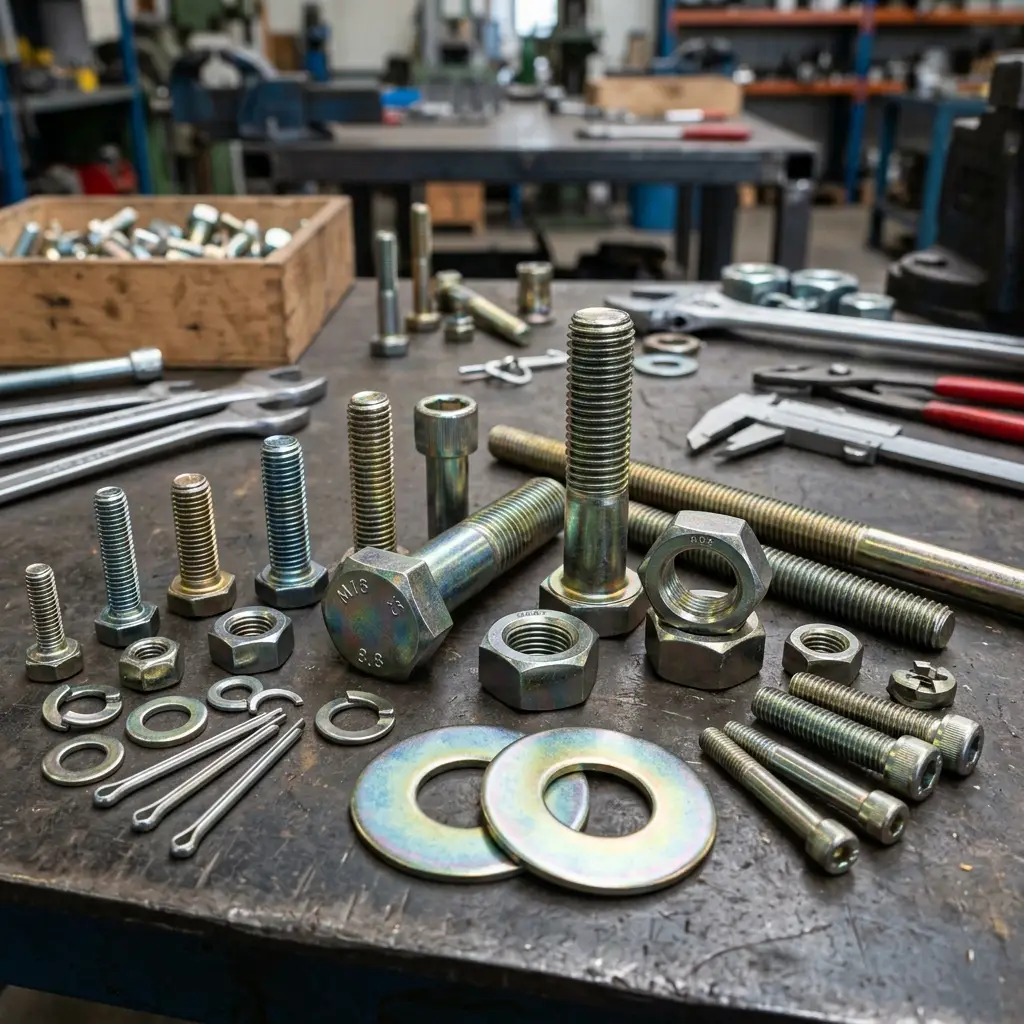
In the electroplating industry, there is an old saying: “You can plate over a bad polish, but you cannot plate over dirt.”
Nearly 80% of all plating defects—peeling, blistering, pitting, and skip-plating—can be traced back to failures in the pre-treatment line. When a metal part arrives at a plating facility, it is covered in stamping oils, drawing compounds, rust inhibitors, polishing compounds, and shop dirt. If even a microscopic layer of organic soil remains on the part when it enters the plating tank, the electrodeposited metal will fail to bond to the substrate.
The cornerstone of the pre-treatment line is the Degreasing Cycle. This is almost always a two-step process: Alkaline Soak Cleaning followed by Electrolytic Cleaning.
Here is how they work and why both are absolutely necessary.
Step 1: The Alkaline Soak Cleaner (The Heavy Lifter)
The soak cleaner is the first line of defense. Its job is to remove the bulk of the heavy oils and greases without the use of electricity.
The Chemistry
Soak cleaners are highly alkaline solutions (high pH) containing a mixture of:
- Builders (Sodium Hydroxide, Silicates, Phosphates): These provide the alkalinity necessary to attack the oils.
- Surfactants (Wetting Agents): These lower the surface tension of the water, allowing the chemistry to penetrate underneath the oils.
How It Works: Saponification and Emulsification
When a greasy steel part is dropped into a hot soak cleaner (typically 60°\textC - 80°\textC):
- Saponification: The hot sodium hydroxide reacts with animal and vegetable-based oils (like certain cutting fluids) and literally turns them into water-soluble soap. This soap is then easily rinsed away.
- Emulsification: Petroleum-based oils (like mineral oil or heavy rust preventatives) cannot be saponified. Instead, the surfactants in the cleaner surround the oil molecules, lifting them off the metal and suspending them in the bath as an emulsion, preventing them from redepositing onto the part.
The Limitation: While a hot soak cleaner is excellent at removing thick, heavy sludge, it cannot guarantee a surgically clean, active surface. It often leaves behind a microscopic film of tightly bound soils or smut.
Step 2: The Electrocleaner (The Precision Scrubber)
To achieve the atomic-level cleanliness required for electroplating, the part is moved from the soak cleaner into the Electrocleaner.
The electrocleaner is also an alkaline bath, but it uses direct electrical current (DC) to turn the part itself into a gas generator. The scrubbing action comes from the physical lifting power of millions of microscopic gas bubbles bursting at the surface of the metal.
Electrocleaning can be run in two different polarities: Anodic and Cathodic.
Anodic Electrocleaning (Reverse Current)
The part is made the Anode (Positive).
- The Reaction: Oxygen gas is generated at the surface of the part.
- The Scrubbing Action: As the oxygen bubbles form and expand underneath the remaining microscopic soils, they violently blast the dirt away from the surface.
- The Chemical Etch: Because the part is the anode, a microscopic layer of the metal surface is actually dissolved into the bath. This “de-plating” action ensures that any embedded dirt, fine metal slivers, or carbon smut are physically stripped away, leaving an incredibly active, pure metal surface.
- Application: This is the standard, preferred method for cleaning Steel and Copper.
Cathodic Electrocleaning (Direct Current)
The part is made the Cathode (Negative).
- The Reaction: Hydrogen gas is generated at the surface of the part.
- The Scrubbing Action: Cathodic cleaning generates exactly twice the volume of gas (hydrogen) as anodic cleaning (oxygen). Therefore, the physical scrubbing action is much more violent and aggressive.
- The Danger: Because the part is cathodic, it does not dissolve. Instead, any metallic impurities in the bath (like dissolved iron or zinc) will actually plate onto the part, creating an unwanted, smutty immersion deposit. Furthermore, generating massive amounts of hydrogen drives atomic hydrogen deep into the metal, causing severe hydrogen embrittlement in high-strength steels.
- Application: Cathodic cleaning is generally reserved for Brass, Bronze, and Zinc Die-Castings. These non-ferrous metals are too sensitive to be cleaned anodically (they would dissolve too rapidly or tarnish heavily).
The Ultimate Test: The Water Break
How does an operator know if the degreasing cycle was successful? They use the oldest, most reliable test in the industry: The Water Break Test.
After the part leaves the electrocleaner and goes through a clean water rinse, the operator holds it up and observes how the water drains off the surface.
- FAIL: If the water beads up into droplets (like rain on a freshly waxed car), organic oils are still present on the surface. The part must go back to the beginning.
- PASS: If the water sheets off in a continuous, unbroken, glass-like film, the surface is perfectly clean and chemically active. The part is ready for the acid pickle and the plating tank.
At Platinex Industries, we believe that world-class finishing requires world-class chemistry. Our automated lines utilize multi-stage alkaline soaking, ultrasonics, and precisely controlled anodic electrocleaning to guarantee atomic-level adhesion on every part. Contact our engineering team to discuss our quality control protocols.