
Lead Times and Throughput: Scaling Surface Finishing for Bulk Orders
Learn how to evaluate a plating vendors true capacity and throughput capabilities to ensure your supply chain remains uninterrupted during high-volume manufacturing.
In the world of high-volume manufacturing—whether producing automotive fasteners, consumer electronics, or switchgear components—the speed of your assembly line is entirely dependent on the slowest link in your supply chain.
More often than not, that bottleneck is surface finishing.
When you scale production from 10,000 units a month to 1,000,000 units a month, your electroplating partner must be able to scale their throughput proportionately without sacrificing quality. This article explores how to evaluate a plating vendor’s true capacity and strategies for managing bulk order lead times.
The Difference Between “Capacity” and “Throughput”
When auditing a plating vendor, many procurement managers make the mistake of asking: “What is your vat capacity?” A vendor might boast about having 5,000-liter plating tanks.
However, tank volume is largely irrelevant. The metric that matters is Throughput—the actual volume of acceptable, quality-verified parts that can exit the facility per hour.
Throughput is dictated by several factors beyond tank size:
- Rectifier Amperage: Electroplating is driven by electrical current. A massive tank with an underpowered rectifier will plate parts very slowly. High throughput requires massive, modern rectifiers capable of delivering thousands of amps consistently.
- Material Handling Automation: How fast can parts be loaded, transferred between chemical baths, and unloaded? Automated hoists and programmable logic controllers (PLCs) drastically increase throughput compared to manual, labor-intensive lines.
- Drying Capabilities: A line can plate quickly, but if the drying ovens are inefficient, wet parts will bottleneck the packing and shipping process.
Rack Plating vs. Barrel Plating: Choosing the Right Method
Scaling throughput requires selecting the optimal plating methodology for your specific component.
Barrel Plating (For High-Volume, Small Parts)
Ideal for bolts, nuts, washers, and small electrical terminals. Parts are loaded into a rotating perforated barrel submerged in the plating bath.
- Pros: Massive throughput and highly cost-effective for bulk items. Millions of parts can be plated per shift.
- Cons: Parts tumble against each other, which can damage delicate threads or bend fragile pins.
Rack Plating (For Complex, Delicate, or Large Parts)
Parts are individually hung on custom-designed jigs or racks with conductive hooks.
- Pros: Zero part-to-part contact. Prevents physical damage and allows for precise control of the electrical field (current density) to ensure uniform plating thickness on complex geometries.
- Cons: Slower throughput and higher labor costs compared to barrel plating, as each part must be manually racked and un-racked.
Strategies for Securing Your Supply Chain
If surface finishing is creating lead time anxiety for your production planners, consider these strategies:
1. Vendor Consolidation
Using five different plating shops to handle your volume often creates logistical nightmares and quality inconsistencies. Partnering with a single, highly capable vendor simplifies logistics and gives you the leverage of a high-value client to demand priority scheduling.
2. The Kanban System
Work with your plater to establish a Kanban or Just-In-Time (JIT) inventory system. Rather than shipping massive, infrequent batches, establish a continuous, daily flow of raw parts to the plater and finished parts back to your assembly line. This smooths out production spikes and prevents the plater’s lines from being overwhelmed.
3. Dedicated OEM Plating Lines
For the ultimate guarantee of throughput and zero lead times, nothing beats a captive line. As detailed in our OEM Advantage guide, Platinex Industries builds and operates dedicated surface treatment plants explicitly for single high-volume partners. Your production schedule becomes our production schedule.
Scaling with Platinex Industries
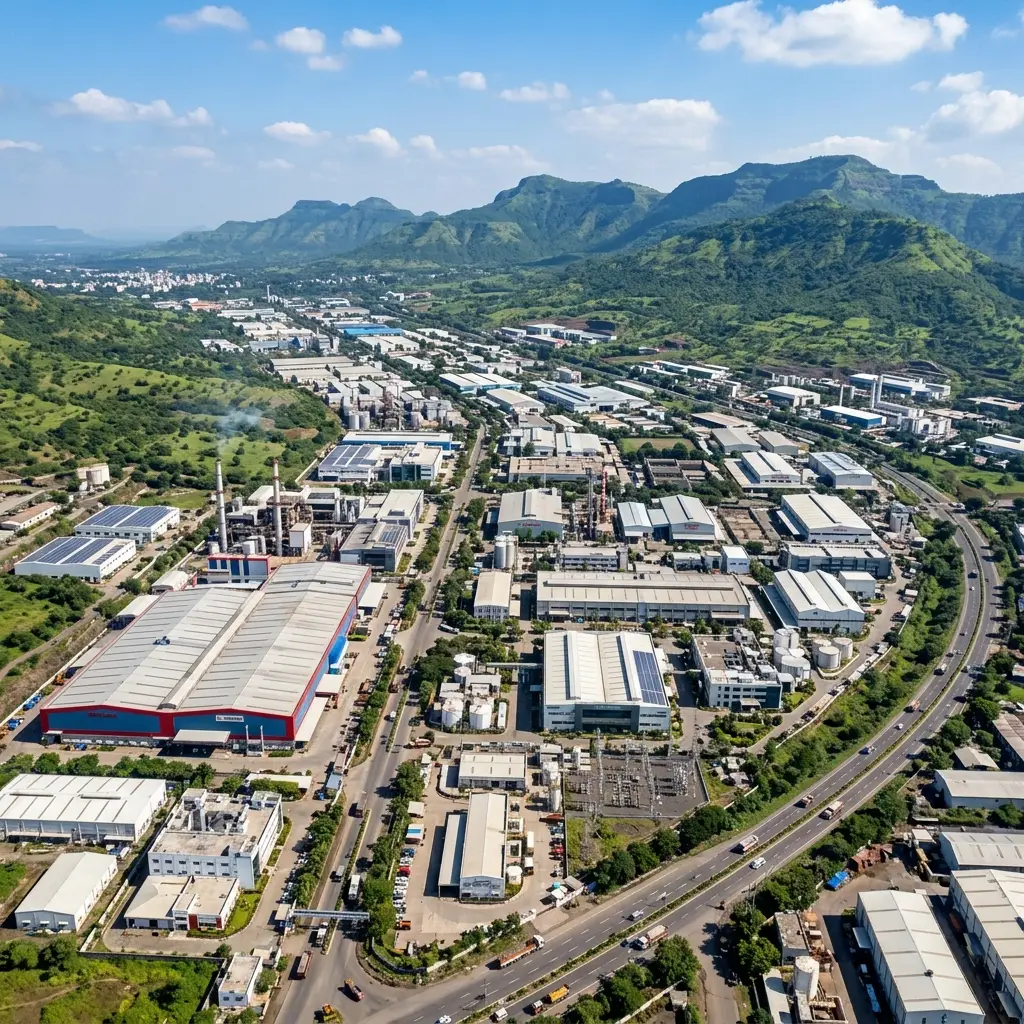
Located in the heart of the Nashik MIDC, Platinex Industries is engineered for scale. We operate high-amperage, automated barrel and rack lines capable of processing massive tonnage without compromising our rigorous quality control standards.
Don’t let surface finishing be the bottleneck in your growth. Contact our production planning team today to discuss your volume requirements and lead time targets.