
Hard Chrome Plating: Thickness, Hardness, and Industrial Applications
A deep dive into industrial hard chrome plating. Learn about the hexavalent chromium process, typical thickness specifications, hardness properties, and why it remains the ultimate wear-resistant coating for hydraulic cylinders and machine tools.
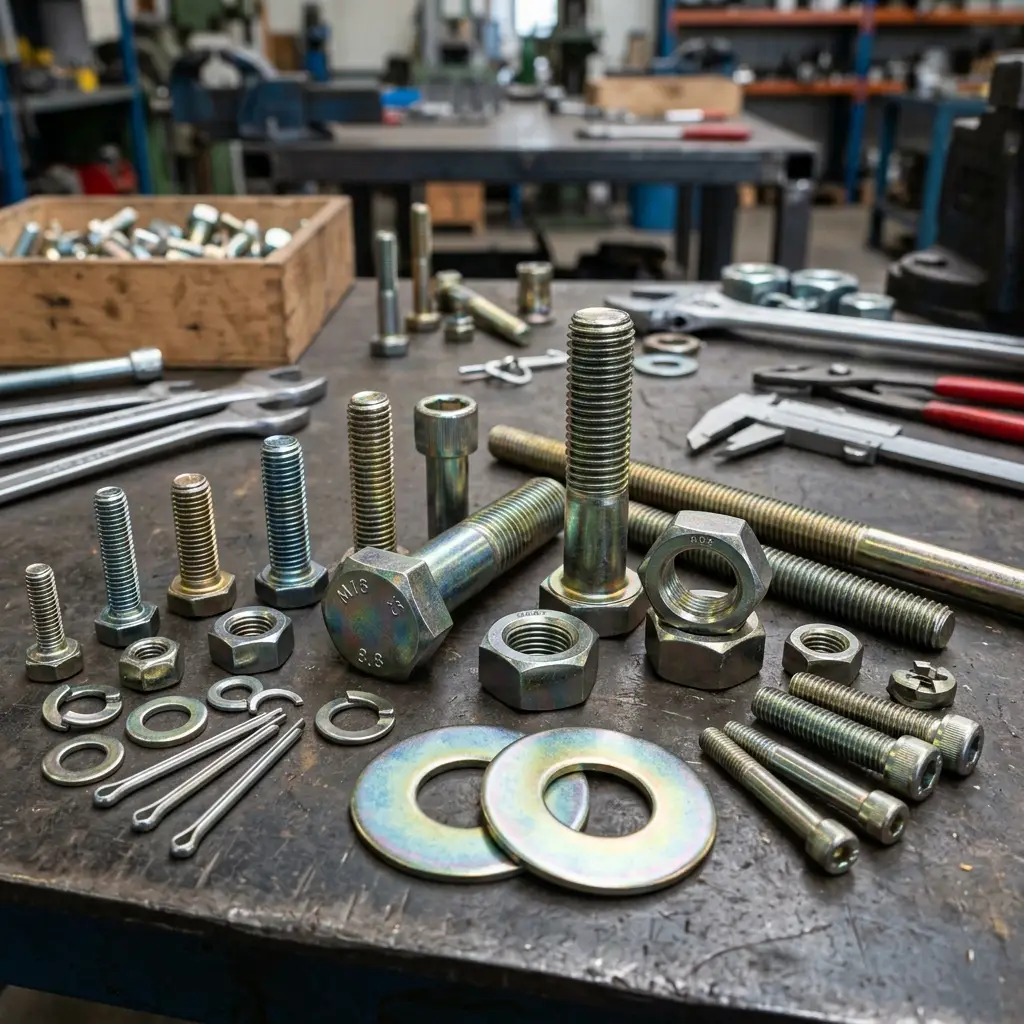
When an engineer specifies “chrome plating,” they must clarify immediately whether they mean decorative chrome or hard (industrial) chrome. While both deposit chromium metal, they serve entirely different purposes, are applied at vastly different thicknesses, and use different underlying plating stacks.
Decorative chrome is a flash layer (0.2–0.5 µm) applied over a thick nickel undercoat to provide a shiny, non-tarnishing blue-white finish. Hard chrome is a thick (10–500 µm), functional coating applied directly to steel to provide extreme wear resistance, low friction, and dimensional restoration.
This guide focuses on industrial hard chrome plating — the ultimate wear-resistant coating for demanding mechanical applications.
Why Specify Hard Chrome? The Big Three Properties
Hard chrome is not chosen for its looks. It is specified because it offers a combination of three properties that few other coatings can match at a comparable cost:
1. Extreme Hardness
Electrodeposited hard chrome has a macro-hardness of 850–1050 HV (Vickers Hardness), equivalent to 65–70 HRC on the Rockwell C scale. This makes it harder than almost all hardened tool steels and file-hardened surfaces. This extreme hardness provides exceptional abrasive wear resistance, making it ideal for hydraulic cylinder rods operating in dirty environments (earthmoving, mining).
2. Low Coefficient of Friction
Hard chrome has one of the lowest coefficients of friction of any metal. Against steel, the dynamic coefficient of friction is approximately 0.16 (unlubricated) and < 0.05 (lubricated). Furthermore, chrome is non-galling, meaning it will not cold-weld or tear when sliding under heavy load against steel, bronze, or cast iron bearings.
3. Corrosion Resistance
Chromium is a highly reactive metal that forms an instant, passive oxide layer in air. This passive film makes hard chrome highly resistant to oxidation and many chemical environments. However, electrodeposited hard chrome contains microscopic “micro-cracks.” While these cracks hold lubricating oil (a benefit for engine components), they also provide a path for corrosive agents to reach the steel substrate. For severe corrosion environments, a nickel undercoat is often specified beneath the hard chrome.
The Hard Chrome Plating Process
Hard chrome is electroplated from a hexavalent chromium (Cr⁶⁺) bath. Unlike most other plating baths (zinc, copper, nickel) which operate at high current efficiencies (85–98%), the hard chrome bath is notoriously inefficient.
Bath Chemistry
A standard “Sargent” hard chrome bath contains:
- Chromic Acid (CrO₃): 250 g/L (the chromium source)
- Sulfuric Acid (H₂SO₄): 2.5 g/L (the catalyst)
- Ratio of CrO₃ to H₂SO₄ must be strictly maintained at 100:1
Modern “mixed catalyst” baths add fluorides to increase plating speed and current efficiency, though they can etch unplated areas of the part.
Process Characteristics
- Low Current Efficiency: Only 10–20% of the electrical energy goes into depositing chromium. The remaining 80–90% goes into splitting water, generating massive amounts of hydrogen gas at the cathode (your part) and oxygen at the anode.
- High Current Density: Hard chrome requires very high current densities to plate — typically 30 to 60 A/dm² (compared to 2–5 A/dm² for nickel or zinc). This requires massive rectifiers and heavy-duty buswork.
- Anodes: Unlike copper or nickel plating where the anode is the metal being deposited and dissolves into the bath, hard chrome uses insoluble lead-alloy anodes. The chromium is replenished by adding chromic acid flakes directly to the bath.
- Poor Throwing Power: Hard chrome has terrible throwing power. It builds up rapidly on edges and points, and struggles to plate into recesses. For complex shapes, custom-built conforming lead anodes must be fabricated to match the part’s contour and ensure uniform thickness.
Thickness Specifications and Dimensional Control
Hard chrome thickness varies drastically based on the application:
| Application | Typical Thickness | Purpose |
|---|---|---|
| Flash Chrome | 5–15 µm | Light wear, cutting tools, moulds |
| Standard Industrial | 25–50 µm | Hydraulic rods, machine tool ways |
| Heavy Wear/Salvage | 100–500+ µm | Rollers, rebuilding worn shafts |
To Grind or Not to Grind?
Because hard chrome builds up heavily on edges (the “dog-bone” effect) and has a naturally nodular surface at high thicknesses, precision parts often require post-plate grinding.
- Plating to Size: For thin deposits (< 20 µm) on simple geometries, it is possible to plate to final dimensional tolerance without post-grinding. This requires excellent tank control and often custom masking/anodes.
- Plate and Grind: For thick deposits or tight tolerances, the standard practice is to under-size the steel part, over-plate the chrome by 50–100 µm, and then cylindrical-grind the chrome back to the final precise dimension and surface finish (Ra).
Environmental and Health Considerations: The Hexavalent Chromium Issue
Hard chrome plating uses hexavalent chromium (Cr⁶⁺), which is a known human carcinogen and a severe environmental hazard.
- Worker Safety: The massive hydrogen evolution during plating creates a mist of chromic acid above the tank. Fume scrubbers, exhaust ventilation, and strict PPE protocols are mandatory to protect workers.
- Environmental Compliance: Wastewater containing Cr⁶⁺ must be chemically reduced to trivalent chromium (Cr³⁺), precipitated, and filtered before discharge. Plating facilities must adhere to strict zero-liquid-discharge (ZLD) or stringent effluent treatment limits.
- RoHS / REACH: While the final metallic chromium deposit on the part is zero-valent (Cr⁰) and generally compliant, the use of hexavalent chromium in the manufacturing process is under intense regulatory pressure globally (e.g., REACH Annex XIV in Europe).
Because of these hazards, the industry is actively researching and adopting alternatives like HVOF (High Velocity Oxygen Fuel) thermal spray coatings and trivalent hard chrome, though these alternatives cannot yet match hexavalent hard chrome in all cost and performance metrics.
Primary Applications
Hydraulic Cylinders: The quintessential hard chrome application. The chrome provides the hard, low-friction surface needed for the cylinder seals to slide against without wearing out, while resisting the outdoor environment.
Engine Valves and Piston Rings: The micro-cracked structure of hard chrome retains lubricating oil, preventing scuffing under high-temperature sliding conditions.
Plastic Extrusion Moulds: Hard chrome prevents abrasive wear from glass-filled plastics and provides excellent release properties (low adhesion) so plastic parts demould cleanly.
Shaft Salvage: When a precision shaft wears down or is machined undersize by mistake, hard chrome is used to build the diameter back up, after which it is ground to the original OEM specification. This is often cheaper than manufacturing a large custom shaft from scratch.
Frequently Asked Questions
Can hard chrome be applied to aluminium? Yes, but it requires a specialized pre-treatment sequence involving a zincate double-dip followed by a copper or nickel strike before the hard chrome can be applied. Plating hard chrome directly onto aluminium will result in immediate peeling.
Does hard chrome cause hydrogen embrittlement? Absolutely. The hard chrome process generates massive amounts of hydrogen at the part surface, and the plating bath is highly acidic. High-strength steel parts (hardness > 32 HRC / 320 HV) must be baked at 190°C for 3–24 hours immediately after plating to relieve hydrogen embrittlement.
How do you strip hard chrome if a part needs rework? Hard chrome can be stripped cleanly from steel using a reverse-current electrolytic process in a sodium hydroxide solution. This process dissolves the chrome without attacking the underlying steel substrate, allowing the part to be re-plated.
What is “flash” hard chrome? Flash chrome refers to very thin deposits (typically 5-10 µm) applied quickly. It is used to provide a hard, non-stick surface on cutting tools, drill bits, and injection moulds where dimensional buildup must be kept to an absolute minimum and post-grinding is not possible.
While Platinex currently specializes in zinc, copper, nickel, tin, and silver processes for the OEM and electrical sectors, understanding hard chrome is essential for any mechanical engineer. Contact us for advice on alternative wear-resistant coatings like Electroless Nickel Plating (ENP) for your specific application.