
2 min read read
Tin vs Silver Plating for Electrical Contacts: Cost vs Performance
Both Tin and Silver are used for electrical contacts, but the price difference is 60:1. Learn when to save with Tin and when you must invest in Silver.
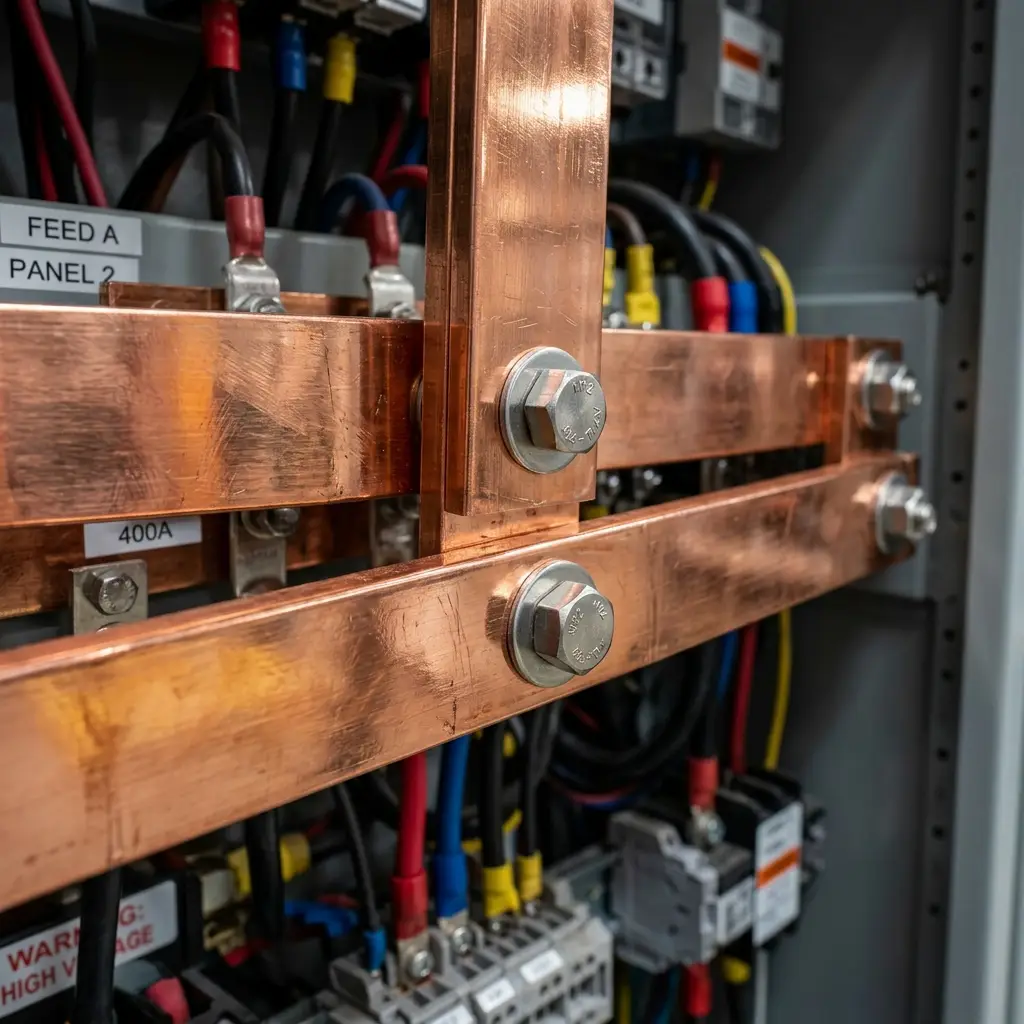
For an electrical engineer designing a busbar or a switchgear terminal, the choice between Tin and Silver is the ultimate “value engineering” decision.
Both metals are highly conductive and prevent the underlying copper from oxidizing. However, Silver costs roughly 60 times more than Tin by weight. When is that extra cost justified?
1. Electrical Conductivity and Resistance
- Silver: The most conductive metal on the periodic table. It has the lowest possible contact resistance. Crucially, silver oxide is also conductive, meaning the joint stays cool even if it tarnishes.
- Tin: Highly conductive, but significantly higher resistance than silver. Tin oxide is an insulator. If a tin joint is not “gas-tight” (bolted very firmly), it can heat up and eventually fail.
2. Operating Temperature
- Tin: Has a low melting point (232°\textC). It begins to soften at 100°\textC. For high-voltage equipment that runs hot, tin is a liability.
- Silver: Stable at much higher temperatures. It is the mandatory choice for heavy-duty contacts that operate continuously above 150°\textC.
3. Wear and Mating Cycles
- Tin: Very soft and “gummy.” It is excellent for joints that are bolted once and never moved. It is poor for sliding contacts (like switches) because it wears off quickly.
- Silver: Can be “hardened” with cobalt or antimony. It is the standard for sliding contacts in circuit breakers and disconnects.
The Verdict
- Use Tin: For low-to-medium current bolted connections, PCB terminals, and cost-sensitive residential electrical equipment.
- Use Silver: For high-voltage busbars, sliding switch contacts, high-temperature environments, and grid-critical infrastructure where a failure is not an option.
Platinex Industries specializes in both high-capacity Tin and precious metal Silver lines. We can help you find the right balance between electrical performance and project budget. Contact us for a technical consultation.