
Silver Plating for Electrical Contacts: Conductivity, Anti-Galling, and Tarni...
Why silver is the preferred plating for switchgear contacts, bus bar joints, and high-current terminals. Covers silver bath chemistry, thickness selection, anti-tarnish treatments, and cost-performance trade-offs.
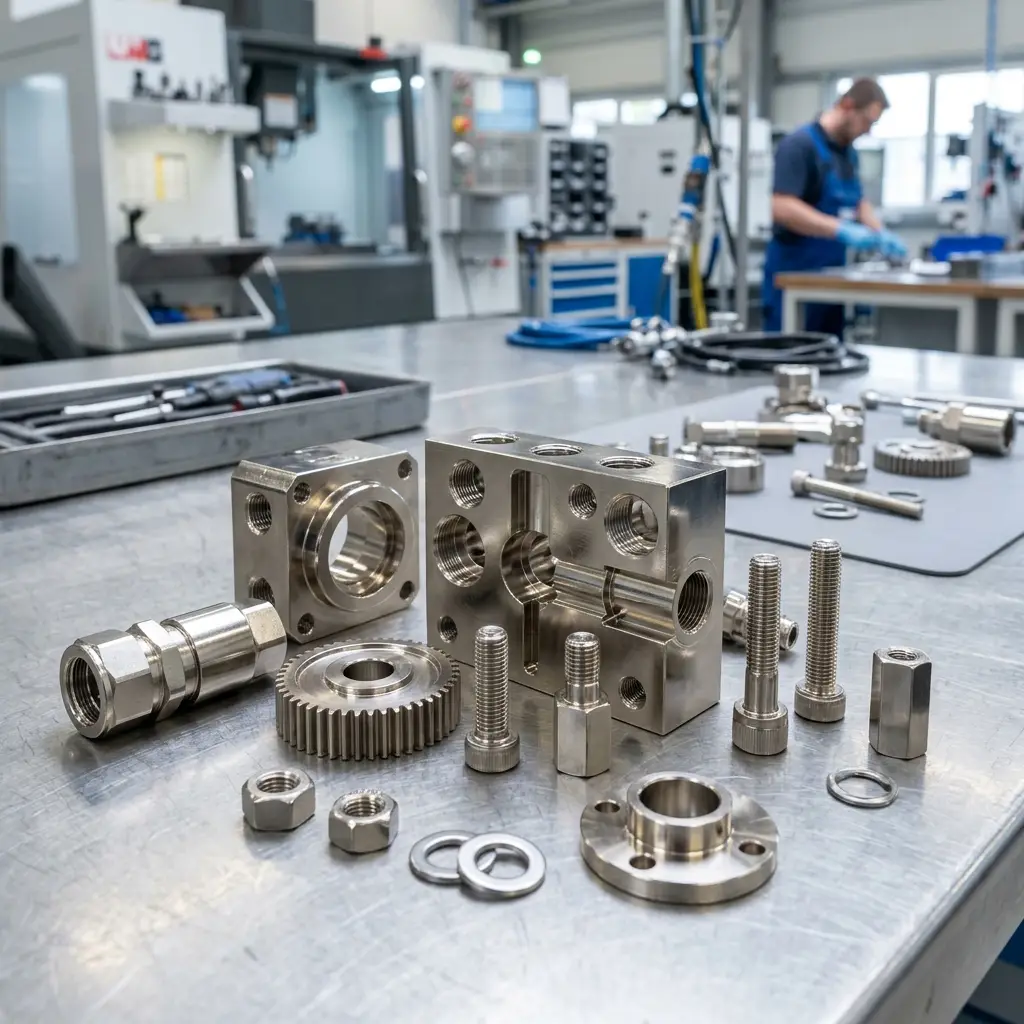
Silver is the best electrical conductor of all metals — better even than copper. Its resistivity of 1.59 µΩ·cm at 20°C beats copper (1.68 µΩ·cm) and is nearly ten times lower than nickel (6.99 µΩ·cm). For electrical contacts where contact resistance must be minimised and thermal dissipation at joints is critical, silver plating is the engineering specification that delivers measurable, quantifiable performance advantages.
This guide explains when and why silver plating is specified for electrical applications, how the process works, and what the key trade-offs are in thickness, hardness, and tarnish control.
Why Silver for Electrical Applications?
1. Lowest Contact Resistance of Any Plated Metal
Contact resistance at a metal-to-metal interface depends on surface film resistance (oxide or contamination films) and the true metallic contact area. Silver’s key advantage is that silver oxide (Ag₂O) is electrically conductive — unlike copper oxide, aluminium oxide, or nickel oxide, which are insulators. This means a silver-plated contact maintains low resistance even if the surface oxidises lightly. In applications involving millions of make-and-break cycles (contactors, relay contacts), this property is decisive.
2. Anti-Galling on Bus Bar Joints
In high-current bus bar installations, bolted joints experience fretting — micro-motion caused by thermal expansion and vibration. When bare copper or aluminium rubs against itself under load, the oxide film breaks and cold-welding (galling) occurs, making disassembly impossible without damaging the bus bar. Silver plating provides a soft, low-friction interface that prevents galling while maintaining electrical conductivity. This is why IS 5082 (aluminium bus bars for switchgear) and IS 1897 (copper bus bars) both specify silver plating for bolted joint surfaces in high-current switchgear.
3. Thermal Stability at Current Overloads
Silver has a melting point of 962°C, far above the thermal overload temperatures experienced by electrical contacts. More practically, silver’s high thermal conductivity (429 W/m·K vs. copper’s 401 W/m·K) means heat generated at the contact interface dissipates rapidly, reducing hot-spot formation.
Silver Plating Process: Bath Chemistry
Silver is electroplated from a cyanide-based electrolyte. Unlike the transition away from cyanide in zinc and copper plating, silver cyanide remains the industry standard because cyanide-free silver alternatives do not yet provide equivalent deposit quality for engineering applications.
Standard Silver Cyanide Bath
| Component | Typical Range | Function |
|---|---|---|
| Silver (as AgCN or Ag₂O) | 30–50 g/L | Silver ion source |
| Potassium Cyanide (KCN) | 60–120 g/L | Complexing agent, conductivity |
| Potassium Carbonate (K₂CO₃) | 15–30 g/L | Conductivity, buffer |
| Brighteners (organic) | Optional, 0–3 mL/L | Grain refinement |
| pH | 10.5–12.5 | Maintained alkaline |
| Temperature | 20–30°C | Standard operation |
| Current Density | 0.5–2.5 A/dm² | Rack plating range |
Silver Strike Layer
Direct silver plating on copper, steel, or nickel can cause adhesion problems due to immersion displacement reactions (similar to the copper-on-steel issue described in our acid copper article). A silver strike — a thin flash of silver (0.1–0.5 µm) deposited from a high-KCN, low-silver solution at high current density — is applied first to establish a sound metallic bond before the main silver build-up.
Thickness Selection Guide
| Application | Recommended Thickness | Standard Reference |
|---|---|---|
| Decorative (indoor, handled) | 2–5 µm | IS 4907 |
| Electrical contacts (light duty) | 5–10 µm | IS 4907 Grade S5 |
| Bus bar joints (medium current) | 10–20 µm | IS 4907 Grade S10 |
| High-current bus bars, switchgear | 20–40 µm | IS 4907 Grade S20 |
| Arc-resistant contacts (contactors) | 40–100 µm | Application specific |
For switchgear bus bars in the 400A–3200A range, the Indian standard IS 4907 specifies 10–25 µm of silver on the contact faces. European switchgear OEMs typically specify 15–25 µm silver per DIN EN 60439.
Hardness and Alloy Silver Plating
Pure silver is very soft — approximately 60–80 HV. This softness has two consequences:
Positive: Soft silver deforms under contact pressure, increasing true contact area and reducing contact resistance.
Negative: In high-fretting or high-speed switching applications, pure silver wears rapidly.
Hard Silver Alloys
For wear-critical contacts, silver alloys are used:
| Alloy | Hardness | Wear Resistance | Contact Resistance | Use Case |
|---|---|---|---|---|
| Pure Silver | 60–80 HV | Low | Excellent | Bus bars, terminals |
| Silver-Antimony (0.5–2% Sb) | 100–150 HV | Good | Very good | Relay contacts |
| Silver-Cobalt (0.2–0.5% Co) | 120–180 HV | Very good | Good | High-cycle contacts |
| Silver-Nickel | 150–200 HV | Excellent | Good | Industrial contactors |
At Platinex, we plate both pure silver for bus bar applications and silver-antimony for contact applications, sourcing brightener and hardening additives from qualified chemical suppliers to maintain consistent alloy composition.
Tarnish: The Practical Challenge
Silver tarnishes through reaction with atmospheric sulfur compounds (H₂S, SO₂) to form silver sulfide (Ag₂S) — the black tarnish familiar from silverware. In industrial environments, particularly those with elevated SO₂ (near factories, power plants), tarnishing can be rapid.
Does tarnish affect electrical performance?
This is the question most engineers ask. The answer is nuanced: light tarnish (< 20 nm Ag₂S) has negligible effect on contact resistance because Ag₂S, while not as conductive as silver, is far more conductive than copper oxide. However, heavy tarnish (> 100 nm) in combination with fretting can significantly increase contact resistance and cause contact heating.
Anti-Tarnish Treatments
1. Benzotriazole (BTA) dip: A thin organic passivation layer that inhibits sulfide formation. Inexpensive, effective for indoor storage and mild service environments.
2. Gold flash over silver: A 0.1–0.25 µm gold flash completely prevents tarnishing and reduces contact resistance further. Used for precision instrumentation contacts and telecommunication connectors.
3. Rhodium flash: Extremely hard (700–900 HV) and tarnish-resistant. Used for jewellery and some precision electrical contacts. Expensive.
4. Lacquer or conformal coating: For purely decorative indoor applications. Not suitable for contacts that must make electrical connection.
Applications in Switchgear Manufacturing
Nashik is a significant centre for switchgear manufacturing, and Platinex serves multiple switchgear OEMs in the region with silver plating for:
- Main bus bars (up to 6300A): 15–25 µm silver on copper bus bar joint faces, per IS 4907
- Incoming and outgoing terminals: 10–15 µm silver on copper and aluminium terminals
- Contactor contacts (silver oxide, Ag₂O): We plate silver on copper contact tips before silver oxide powder is sintered, for medium-voltage contactors
- Instrument transformer terminals: 8–12 µm silver on current transformer (CT) and potential transformer (PT) secondary terminals
Frequently Asked Questions
Can silver be plated directly on aluminium bus bars? Not directly. Aluminium requires a zincate pretreatment followed by a copper or nickel strike before silver plating. The standard sequence for aluminium is: Zincate → Copper strike (alkaline) → Silver strike → Silver build-up.
What is the shelf life of silver-plated components? In clean, dry, indoor storage with BTA treatment: 12–18 months with minimal tarnishing. Without treatment in industrial environments: weeks to months. For extended storage, vacuum pack with anti-tarnish paper.
Silver vs Tin for bus bar contacts — which should I specify? Silver is preferred for joints where contact resistance is critical (high-current applications, frequent assembly/disassembly, elevated temperature environments). Tin is adequate for lower-current applications and is significantly cheaper. The crossover point is typically around 630A in switchgear; above this, silver is almost universally specified.
Is silver plating RoHS compliant? The silver deposit itself is fully RoHS compliant. The silver cyanide bath process chemicals require careful waste treatment per CPCB/State PCB regulations. This is standard practice at any licensed plating facility.
How do you verify silver thickness in production? XRF (X-ray fluorescence) is the standard non-destructive method. We measure every production batch using our in-house XRF analyser to ensure thickness compliance. Results are documented on our test certificates.
Need silver plating for switchgear bus bars or electrical contacts in Nashik? Contact Platinex Industries for a technical consultation and rapid quote — we typically respond within 4 hours.