
Gold Plating for Electronics: Why Connectors Need It
A technical deep dive into gold electroplating for electronic connectors and PCBs. Learn about hard vs. soft gold, the necessity of a nickel underplate, and the specific performance advantages of gold in low-voltage applications.
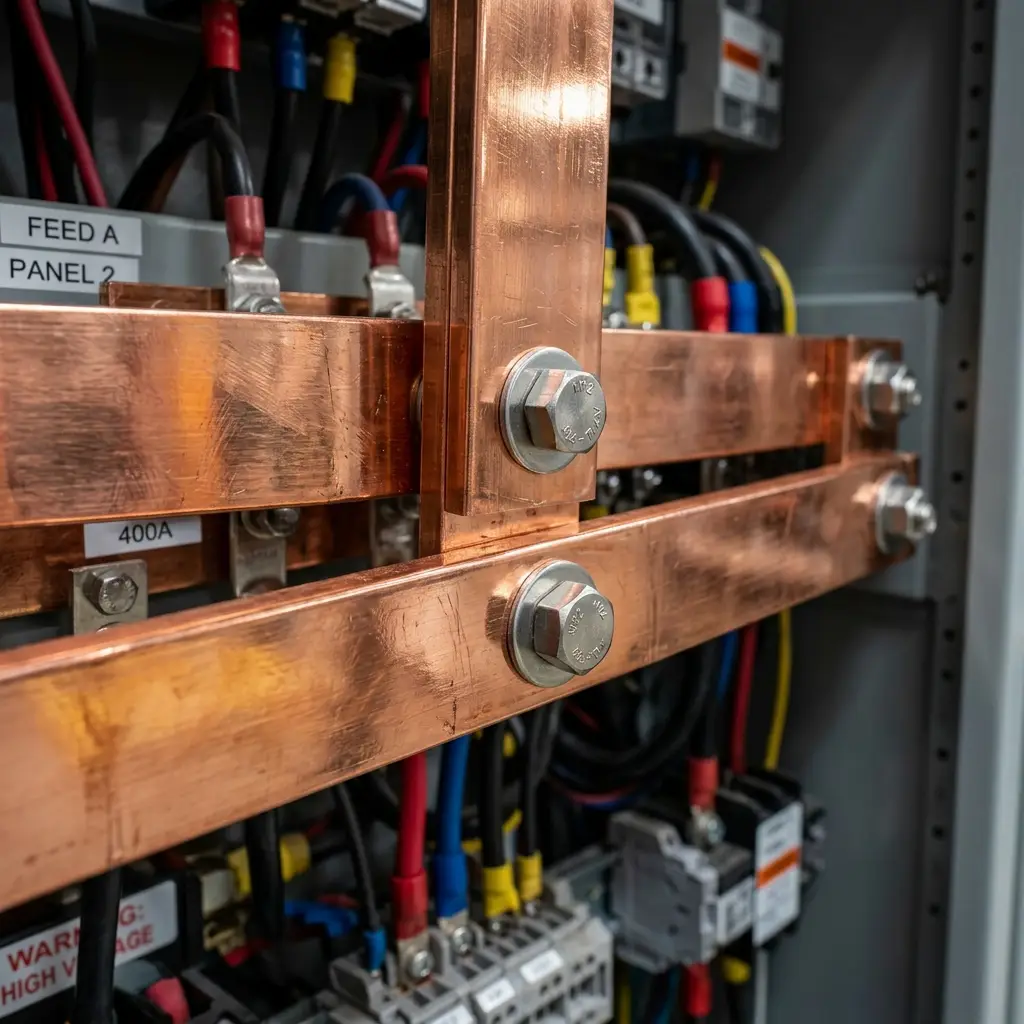
Look inside any high-end smartphone, server rack, or medical device, and you will see the distinctive yellow gleam of gold on the connector pins, PCB pads, and RF switches.
Given that gold currently trades at thousands of dollars per ounce, its widespread use in consumer and industrial electronics might seem like an extravagant waste. However, from an electrical engineering perspective, gold is not a luxury—it is a functional necessity for low-voltage, low-current signal integrity.
This guide explores the physics of why gold is specified for electronic contacts, the difference between “hard” and “soft” gold, and the critical role of the plating stack beneath it.
Why Gold? The Physics of Contact Resistance
To understand why gold is used, we must first look at its alternatives: Copper and Silver are both better electrical conductors than gold. So why plate with gold?
The answer is oxidation and contact resistance.
In high-voltage power distribution (like switchgear), a small amount of surface oxidation on a copper or silver busbar is easily overcome. The high voltage punches right through the thin oxide film.
However, in modern digital electronics—where signals are transmitted at 3.3V, 1.8V, or even millivolts—a microscopic oxide layer acts as an impenetrable insulator.
- Copper oxidizes rapidly in air, forming a resistive layer.
- Silver does not oxidize easily, but it reacts with sulfur in the air to form silver sulfide (tarnish), which can also increase resistance.
Gold is a noble metal. It does not oxidize. It does not tarnish. It does not react with sulfur or most industrial pollutants. A gold-plated contact maintains its pristine, highly conductive metallic surface indefinitely. When a 1.8V digital signal needs to pass through a connector interface, gold guarantees that the contact resistance will be near zero on day one, and remain near zero ten years later.
The Two Types of Gold Plating
Gold plating in electronics is generally divided into two distinct categories based on the bath chemistry and the resulting metallurgical properties.
1. Soft Gold (Pure Gold)
Soft gold is 99.9% pure gold, typically plated from a slightly acidic or neutral cyanide bath.
- Hardness: Very soft (approx. 60-90 Knoop).
- Properties: It is highly ductile, highly solderable, and excellent for wire bonding (where fine gold or aluminum wires are ultrasonically welded to the pad).
- Applications: PCB pads intended for wire bonding, semiconductor packaging, and critical medical implants.
- Drawback: Because it is so soft, it has terrible wear resistance. If used on a sliding connector (like a USB plug), soft gold will scrape off within a few insertion cycles.
2. Hard Gold (Alloyed Gold)
Hard gold is alloyed with tiny amounts of Cobalt or Nickel (usually 0.1% to 0.3%), plated from an acidic cyanide bath.
- Hardness: Much harder (approx. 130-200 Knoop).
- Properties: The addition of cobalt or nickel drastically improves the wear resistance of the deposit. It can withstand hundreds or thousands of insertion/withdrawal cycles.
- Applications: Connector pins, edge connectors (RAM sticks), rotary switches, and any sliding electrical contact.
- Drawback: It is slightly less solderable than pure soft gold, and cannot be used for high-reliability wire bonding.
The Critical Underplate: Why Nickel is Mandatory
If you specify gold plating directly over a copper connector pin, the part will fail.
At room temperature, gold and copper are completely soluble in one another. Over a period of months (or weeks, if temperatures are elevated), the copper atoms will physically diffuse upward through the gold layer, reaching the surface. Once the copper reaches the surface, it oxidizes, completely destroying the low-contact-resistance properties you paid so much money to achieve.
To prevent this, a Nickel Underplate (typically 1.25 to 2.5 µm thick) is absolutely mandatory.
- Diffusion Barrier: Nickel acts as an impenetrable barrier, preventing the copper from migrating into the gold.
- Mechanical Support: Gold is soft. If plated directly over relatively soft copper, contact pressure can deform the base metal, causing the gold to crack. A hard nickel underplate provides a rigid “anvil” that supports the thin gold layer under localized pressure, improving wear resistance.
- Pore Sealing: Very thin gold plating contains microscopic pores. The nickel underplate provides a secondary line of defense against corrosion if atmospheric moisture penetrates those pores.
The Standard Specification Stack: Copper Substrate → 2.0 µm Nickel Plating → 0.75 µm Hard Gold Plating.
Thickness Specifications and Cost Control
Because gold is extraordinarily expensive, thickness specifications are tightly controlled and measured in microinches (µin) or micrometers (µm).
- Flash Gold (0.05 - 0.1 µm / 2 - 4 µin): Used purely to prevent oxidation of the nickel underplate prior to soldering. It provides no significant wear resistance.
- Commercial Connectors (0.38 µm / 15 µin): Standard thickness for consumer electronics (USB ports, audio jacks) requiring moderate insertion cycles.
- Mil-Spec / Telecom (0.75 - 1.25 µm / 30 - 50 µin): Specified for high-reliability connectors (aerospace, server racks, military hardware) requiring thousands of insertion cycles in harsh environments.
To further reduce costs, manufacturers utilize Selective Plating. Instead of barrel-plating entire connector pins in gold (wasting gold on the crimp end that will never see a sliding contact), continuous reel-to-reel plating lines use masking belts to deposit gold only on the specific 2mm contact zone.
Specifying gold plating requires precision. At Platinex Industries, we understand the critical interplay of nickel underplating and gold alloy selection for electrical performance. Contact our team to discuss the optimal plating stack for your connectors.