
Passivation Failure in Zinc Plating: Identifying "White Rust"
When zinc-plated parts show white powdery rust within days, the passivation has failed. Learn the root causes, from bath contamination to curing errors.
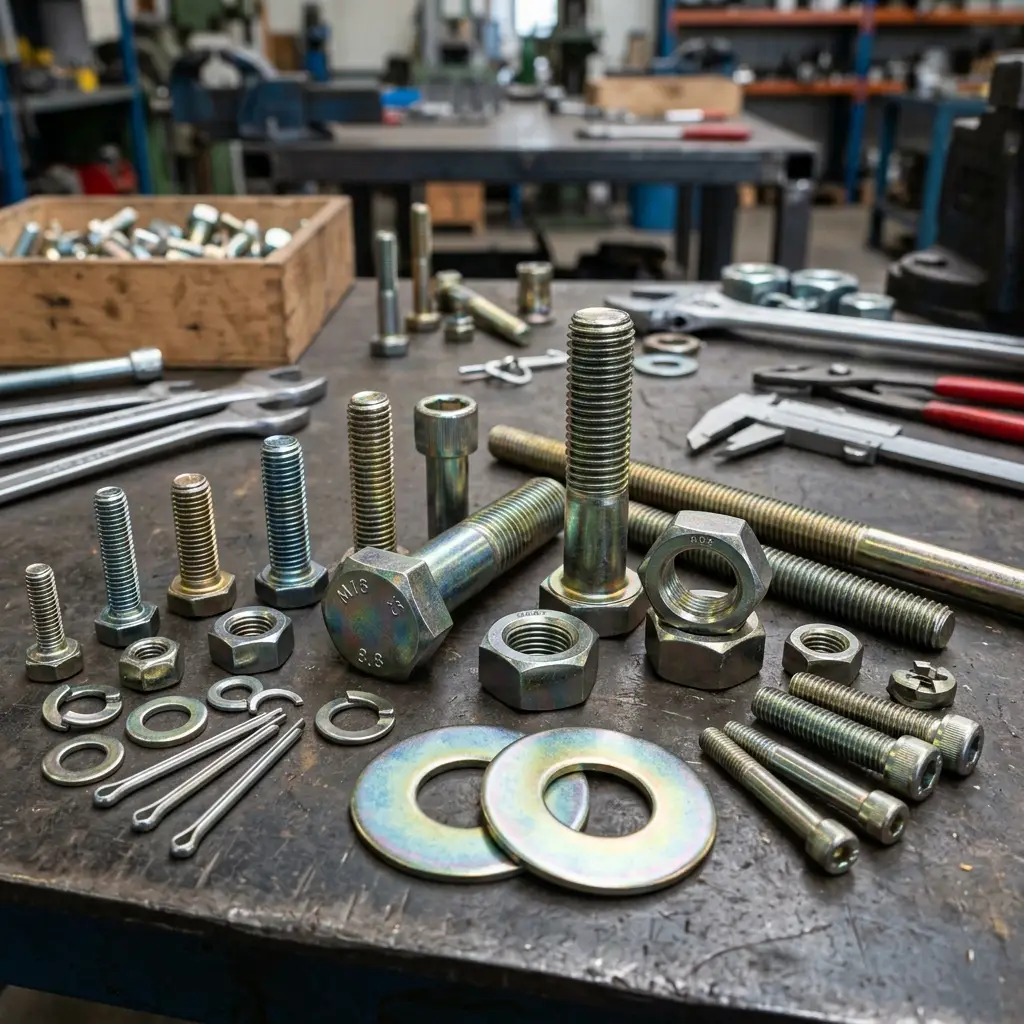
Zinc is a sacrificial coating, but it relies on a microscopically thin Passivation Layer to prevent it from corroding prematurely. When this layer fails, the part will show “White Rust” (Zinc Oxide) almost immediately.
1. Root Cause: Bath Contamination
The trivalent passivation bath is very sensitive. If too much iron or zinc dissolves into the bath, the chemistry becomes “choked.” It will still turn the parts the right color, but it will not form a protective barrier.
- The Fix: Regular bath analysis and dumping the tank as soon as contamination limits are reached.
2. Root Cause: Curing Temperature
Passivation is a gel that needs to “cure” and dry.
- The Danger: If the parts are dried in an oven that is too hot (above 65°\textC), the water is baked out of the gel too fast, causing it to crack and turn to dust. The corrosion protection is destroyed instantly.
3. Root Cause: Handling Damage
Freshly passivated parts are “soft” for the first 24 hours. If they are aggressively tumbled or packed tightly into bags before the coating has hardened, the passivation will be rubbed off, leading to “contact marks” that will show white rust first.
At Platinex Industries, we monitor our passivation baths with laboratory precision and utilize controlled-temperature drying to ensure 100% corrosion performance. Contact our team to resolve your white rust problems.