
Electroplating for Circuit Breaker Contacts and Arc Chambers
When a high-voltage circuit breaker trips, it generates a plasma arc hotter than the surface of the sun. Learn how specialized Silver and Tin plating architectures ensure these critical safety devices function flawlessly.
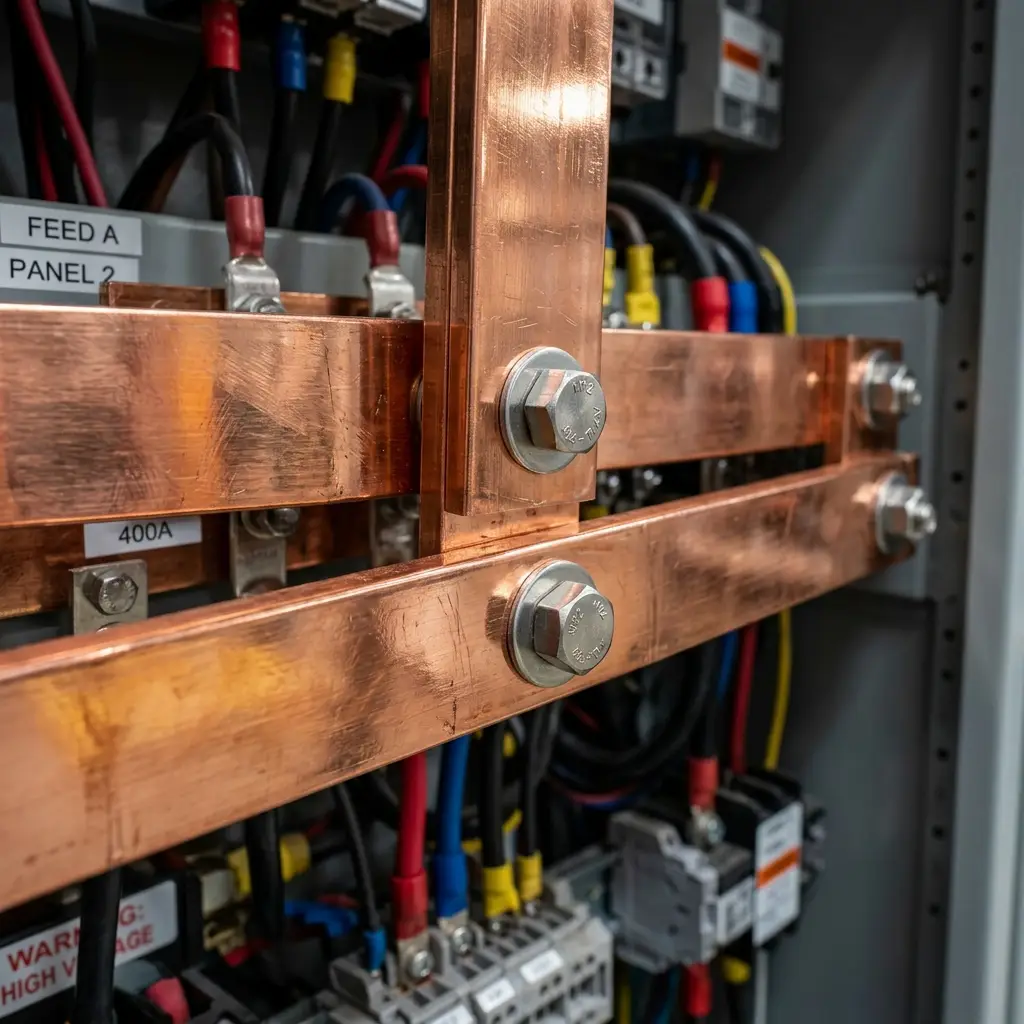
A circuit breaker is the ultimate electrical safety device. Whether it is a small 15-amp breaker in a residential panel or a massive 400-kV Vacuum Circuit Breaker (VCB) in a regional power substation, its job is identical: sit quietly for years, and then, in a fraction of a second, mechanically rip apart a live circuit to stop a catastrophic fault current.
When those copper contacts separate under thousands of amps of fault current, the electricity refuses to stop. It jumps the air gap, creating a massive, sustained plasma arc that can reach temperatures exceeding 20,000°\textC—hotter than the surface of the sun.
The metallic contacts and the surrounding arc-extinguishing chambers must survive this violence. Surface finishing is the key to their survival.
1. The Main Contacts: The Silver Standard
In normal operation, the main contacts of a circuit breaker are closed, carrying the continuous operational current.
The Requirement: Zero Heating
Because they carry current 24/7/365, the main contacts must have near-zero electrical resistance. If the contacts have even a microscopic layer of insulating oxide, they will heat up. Heat degrades the internal springs, destroys the plastic housing, and ultimately causes the breaker to fail in a closed position—resulting in a catastrophic fire.
The Finish: Heavy Silver Plating
The primary mating surfaces of the copper contacts are electroplated with Heavy Silver.
- Thickness: Typically 10 \text µm to 25 \text µm.
- The Silver Oxide Advantage: As discussed in previous guides, silver is unique among metals. When copper oxidizes, the oxide is an insulator. When silver oxidizes, or when it reacts with sulfur to form silver sulfide (tarnish), the resulting film remains highly electrically conductive. A black, tarnished silver contact will still pass current safely without overheating.
- Anti-Welding: When the breaker trips, the immense heat of the initial arc can cause bare copper contacts to melt and weld together, preventing the breaker from opening. Silver has excellent anti-welding properties, ensuring the contacts separate cleanly.
2. The Arcing Contacts: Tungsten and Silver
In large industrial Air Circuit Breakers (ACBs), the design usually features two sets of contacts: the “Main Contacts” (which carry the continuous current) and the “Arcing Contacts” (which are designed to take the sacrificial damage when the breaker opens).
When the breaker trips, the main silver contacts open first (without arcing). A fraction of a second later, the arcing contacts separate, drawing the massive plasma arc away from the delicate main contacts.
The Requirement: Surviving the Plasma
Standard copper or silver would vaporize instantly under the 20,000°\textC plasma arc. Therefore, arcing contacts are typically made of Silver-Tungsten or Copper-Tungsten sintered alloys.
- Tungsten has an insanely high melting point (3,422°\textC), allowing it to survive the arc blast.
- The silver or copper provides the necessary electrical conductivity.
The Plating Challenge
Sintered tungsten alloys are exceptionally difficult to electroplate because of their porosity and the passive nature of tungsten. They require aggressive acid activation and specialized alkaline copper strikes before they can be successfully silver-plated to ensure a low-resistance connection back to the main busbar.
3. The Arc Chutes (Splitter Plates): Zinc and Nickel
As the arc is drawn between the arcing contacts, magnetic forces push the plasma upward into an “Arc Chute.” The arc chute consists of a stack of V-shaped steel plates (splitter plates). The plasma arc is forced into these plates, where it is chopped into dozens of smaller arcs, cooled, and extinguished.
The Plating Requirements for Splitter Plates
These steel plates sit idle for years but must instantly absorb massive thermal shock and highly ionized gases.
- Corrosion Protection: The steel plates must not rust, or the oxide layer will insulate the plates, preventing the arc from transferring.
- Magnetic Permeability: The plates must remain highly magnetic to effectively “pull” the arc into the chute.
The Finish: Zinc or Electroless Nickel
- Zinc Plating: Historically, standard zinc plating was used. However, the extreme heat of an arc can vaporize zinc, creating conductive zinc fumes that could cause secondary flashovers inside the breaker.
- Electroless Nickel (ENP): Modern, high-performance arc chutes often utilize Electroless Nickel Plating. ENP provides a perfectly uniform, highly conductive surface that does not readily vaporize. Furthermore, Mid-Phosphorus ENP is magnetic, preserving the magnetic pull of the underlying steel plate.
4. The Terminals: Matte Tin
The external lugs and terminals where the customer bolts the external wiring to the circuit breaker are typically plated in Matte Tin.
- Tin provides an excellent, soft, gas-tight connection against the aluminum or copper cables of the external grid.
- A Nickel Underplate is strictly required under the tin to prevent copper migration from the breaker terminal, ensuring the connection point remains cool and conductive for the 30-year lifespan of the panel board.
At Platinex Industries, we understand that human lives and grid stability rely on the performance of circuit breaker components. We maintain strictly controlled Heavy Silver and Matte Tin lines dedicated to the power distribution sector. Contact our engineering team to ensure your switchgear is plated to the highest safety standards.