
Plating for Oil and Gas: Corrosion in Extreme Environments
Downhole tools and offshore equipment face H2S, CO2, and high-pressure chlorides. Discover why High-Phosphorus Electroless Nickel is the industry standard for oilfield survival.
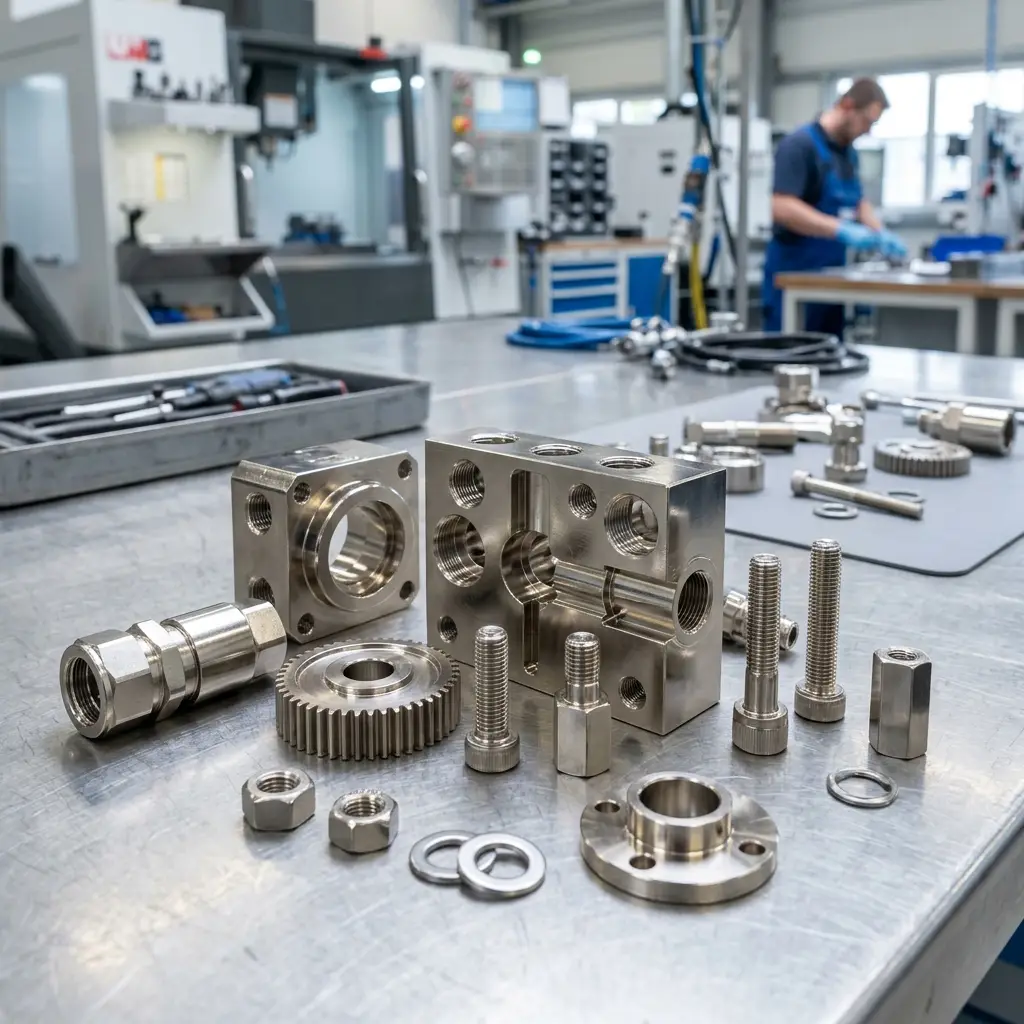
In the oil and gas industry, “corrosion” isn’t just a maintenance headache—it’s a multi-billion dollar risk. Equipment operating in offshore platforms or deep downhole environments faces a toxic cocktail of high-pressure salt water, hydrogen sulfide (\textH_2\textS), carbon dioxide (\textCO_2), and abrasive sand.
When a valve or a pump fails 3,000 meters below the seabed, the cost of extraction and replacement can exceed the cost of the component by a factor of a thousand. Surface finishing is the primary line of defense that makes modern energy extraction possible.
1. High-Phosphorus Electroless Nickel (ENP)
For the “wetted” internal parts of valves, pumps, and downhole tools, High-Phosphorus ENP (10-14% P) is the undisputed industry standard.
- Why High-Phos? Unlike electrolytic plating, High-Phos ENP is amorphous (glass-like). It has no grain boundaries, which means corrosive ions like chlorides cannot find a path to the substrate.
- Acid Resistance: It is exceptionally resistant to “sour gas” (\textH_2\textS) and \textCO_2 (carbonic acid), which aggressively attack standard stainless steels.
- Uniformity: Downhole tools have incredibly complex internal geometries. ENP plates every internal thread and blind hole with perfect thickness, ensuring pressure-tight seals function every time.
2. Hard Chrome for Abrasive Wear
While ENP handles the chemical attack, Industrial Hard Chrome handles the mechanical violence.
- Drill String Components: Parts subjected to extreme abrasive wear from drilling mud and rock cuttings are plated with heavy Hard Chrome (up to 250 µm).
- Hydraulic Actuators: The rods for offshore hydraulic systems rely on Hard Chrome for its low friction and wear resistance, often plated over a base of Electroless Nickel to prevent the substrate from rusting through the chrome’s micro-cracks.
3. Zinc-Nickel for Offshore Fasteners
Standard zinc-plated bolts will show red rust within days on an offshore platform.
- The Standard: Zinc-Nickel (12-15% Ni) with a high-performance sealer is the modern specification for offshore fasteners and brackets. It provides 1,000+ hours of salt spray resistance and, crucially, minimizes galvanic corrosion when steel bolts are connected to stainless steel or aluminum equipment.
Survival in the oilfield requires uncompromising metallurgical quality. Platinex Industries provides high-capacity High-Phosphorus ENP and Zinc-Nickel services engineered for the most aggressive environments on earth. Contact our specialists to review your Oil & Gas specifications.