
Electroplating on Steel: Best Finishes for Ferrous Substrates
Steel is the most common substrate for electroplating, but it is highly vulnerable to corrosion. Explore the engineering choices between Zinc, Zinc-Nickel, Nickel, and Copper when plating on carbon and mild steel.
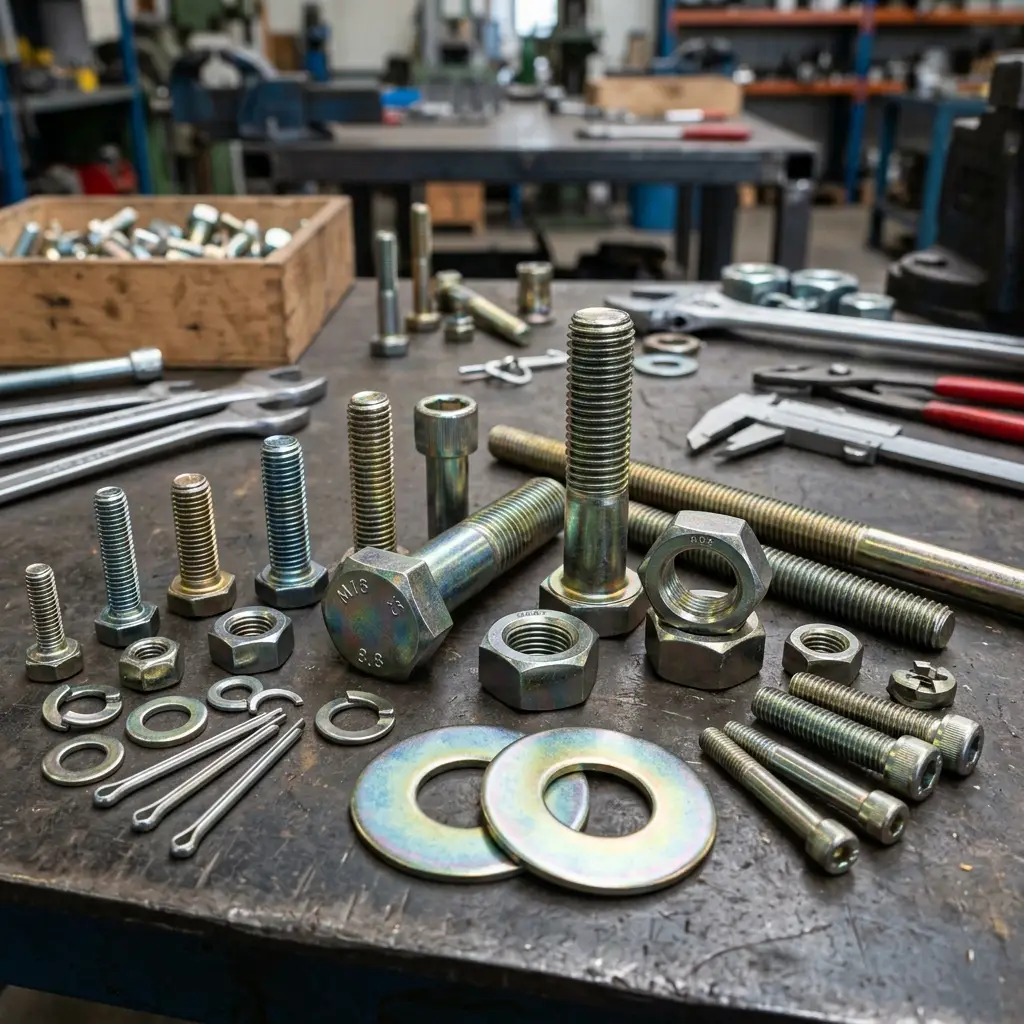
Mild and carbon steels are the backbone of global manufacturing. Steel is strong, relatively inexpensive, easily machined, and easily welded. However, it possesses one fatal flaw: it is highly reactive to oxygen and moisture. Left unprotected, steel will aggressively convert back into iron oxide (red rust).
Because of this vulnerability, almost every steel component destined for an industrial or consumer application requires a protective surface finish. Electroplating is the dominant method for protecting steel while maintaining tight dimensional tolerances.
This guide outlines the most common engineering finishes for steel substrates, how they protect the metal, and when to specify each.
The Pre-Treatment: Preparing Steel for Plating
Compared to aluminum or stainless steel, mild steel is remarkably easy to plate. It does not form a stubborn, passive oxide layer. However, proper pre-treatment is still non-negotiable.
For steel to accept an atomic-level metallic bond during electroplating, the surface must be chemically active and completely free of organic soils (stamping oils, drawing compounds, rust inhibitors) and inorganic soils (heat scale, laser oxide, flash rust).
Standard Steel Pre-Treatment Cycle:
- Hot Alkaline Soak Clean: Saponifies and emulsifies heavy oils.
- Anodic Electro-cleaning: Uses electrical current to generate oxygen bubbles at the part surface, literally scrubbing away microscopic soils and creating a chemically active surface.
- Acid Pickle (HCl or H2SO4): A brief dip in hydrochloric or sulfuric acid to dissolve any light surface rust or scale, leaving pure, bare iron ready for plating.
(Note: High-carbon steels and heat-treated steels > 32 HRC require modified, shorter acid pickles to minimize the absorption of hydrogen, which causes hydrogen embrittlement).
1. Zinc Plating: The Baseline Sacrificial Protection
If the goal is purely to stop steel from rusting at the lowest possible cost, Zinc Electroplating is the answer.
- The Mechanism: Zinc protects steel sacrificially (galvanically). Because zinc is more electrochemically active than iron, the zinc coating will corrode preferentially, protecting the steel underneath. Even if the zinc is scratched, exposing bare steel, the surrounding zinc will sacrifice itself to prevent the scratch from rusting.
- Appearance: Ranges from bright silver/blue to iridescent yellow or black, depending on the trivalent passivation applied over the zinc.
- Applications: Fasteners (nuts, bolts, washers), automotive brackets, stamped chassis components, and general hardware.
- Limitations: Standard zinc breaks down rapidly in harsh marine environments or high-heat environments (above 120°\textC).
2. Zinc-Nickel Alloy: The Severe Environment Upgrade
When standard zinc is not enough—particularly in the automotive sector—engineers upgrade to Zinc-Nickel (12-15% Ni).
- The Mechanism: By alloying zinc with a small percentage of nickel, the sacrificial corrosion mechanism is slowed down immensely. The coating remains sacrificial to steel, but it corrodes at a fraction of the rate of pure zinc.
- Performance: Zinc-nickel provides up to 5 times the salt-spray resistance of standard zinc and maintains its integrity at high temperatures (up to 250°\textC). It also minimizes galvanic corrosion when the steel part is bolted to aluminum.
- Applications: Automotive brake calipers, under-hood components, heavy agricultural equipment, and marine hardware.
3. Nickel Plating: Barrier Protection and Aesthetics
Nickel plating works fundamentally differently than zinc. It is a barrier coating.
- The Mechanism: Nickel is more noble (less reactive) than steel. It protects the steel by acting as an impenetrable physical barrier against moisture. However, if the nickel layer is scratched or contains microscopic pores, the exposed steel will rust rapidly (galvanic acceleration).
- Appearance: Can be plated matte (for functional uses) or brilliantly bright (as the foundation for decorative chrome).
- Performance: Bright nickel offers exceptional leveling (making rough steel look like a mirror) and moderate wear resistance. Electroless Nickel (ENP) offers perfect uniform thickness and extreme chemical resistance.
- Applications: Hand tools, motorcycle exhaust components (Bright Nickel), oil and gas valves (High-Phos ENP).
4. Copper Plating: The Strike and the Heat Stop
Copper is rarely used as a final finish on steel because it tarnishes quickly and, like nickel, will accelerate the rusting of steel if scratched. Instead, copper is used functionally as an undercoat.
- The Copper Strike: As discussed in previous guides, placing steel directly into an acidic plating bath (like acid copper or bright tin) causes an immersion deposit, ruining adhesion. A thin alkaline copper strike is applied first to seal the steel and provide a perfect foundation for subsequent layers.
- Heat Treatment Stop-Off: In carburizing (case hardening) operations, specific areas of a steel part may need to remain soft while the rest of the part is hardened. A heavy layer of copper electroplating (15 - 25 \text µm) is applied to those specific areas. The copper acts as an impenetrable barrier to the carbon gas in the furnace, keeping the underlying steel soft and machinable.
A Note on Hydrogen Embrittlement
Any time steel with a tensile strength greater than 1000 MPa (or hardness > 32 HRC / 320 HV) is electroplated, it absorbs atomic hydrogen from the acid pickle and the plating bath. This hydrogen migrates to the grain boundaries of the steel and will cause sudden, catastrophic brittle fracture under load.
The Rule: High-strength steel parts must be baked in an oven at approximately 190°\textC - 220°\textC for 4 to 24 hours (depending on strength) immediately after plating to drive the hydrogen out before the part is placed in service.
Platinex Industries operates fully automated Zinc, Zinc-Nickel, Copper, and Nickel lines dedicated to processing high-volume steel stampings and fasteners. Contact our engineering team to determine the most cost-effective finish for your steel components.