
2 min read
Technical Guides Zinc plating color is more than just aesthetics. Learn how the different trivalent passivations differ in salt spray performance and corrosion resistance.

Zinc plating color is more than just aesthetics. Learn how the different trivalent passivations differ in salt spray performance and corrosion resistance.
One is a chemical bond, the other is a plastic skin. Learn the critical differences between electroplating and powder coating for industrial and consumer hardware.
Steel is the most common substrate for electroplating, but it is highly vulnerable to corrosion. Explore the engineering choices between Zinc, Zinc-Nickel, Nickel, and Copper when plating on carbon and mild steel.
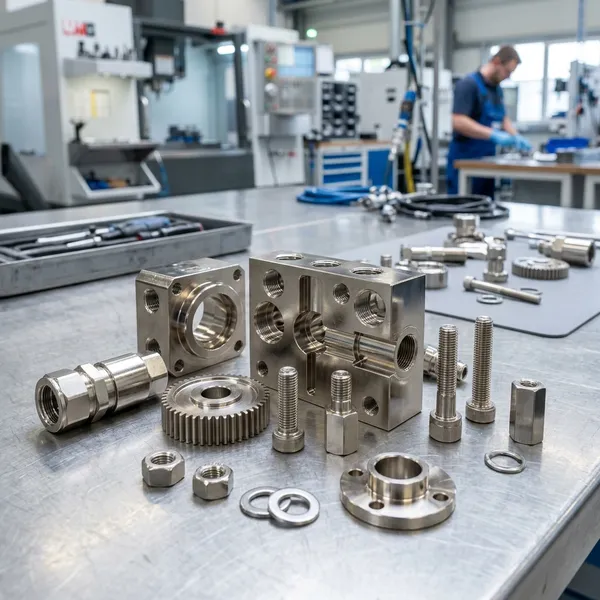
Discover why a single layer of bright nickel fails outdoors, and how the Duplex Nickel system (semi-bright under bright nickel) dramatically increases corrosion protection for automotive and marine hardware.
Understand the autocatalytic chemistry of Electroless Nickel Plating. Learn the differences between Low, Mid, and High-Phosphorus ENP, and why its perfect throwing power makes it essential for complex engineering parts.
Comparing zinc electroplating and hot-dip galvanizing for steel corrosion protection. Understand the differences in coating thickness, appearance, dimensional impact, and performance in harsh environments.
Comparing standard zinc electroplating with zinc-nickel alloy plating. Understand the differences in corrosion resistance, cost, temperature stability, and when an upgrade to zinc-nickel is justified.
Why zinc-nickel alloy electroplating has become the standard corrosion protection for automotive underbody and fastener applications. Process chemistry, nickel content selection, and OEM specification guide.
A complete guide to alkaline non-cyanide zinc electroplating — covering bath chemistry, throwing power advantages, and when to choose it over acid chloride zinc for industrial applications.