
White Rust on Zinc Plating: Causes, Prevention, and Storage Solutions
Understand the chemistry behind white rust (zinc hydroxide) formation on zinc-plated parts. Learn how proper passivation, sealing, and storage environments can prevent this common but destructive storage defect.
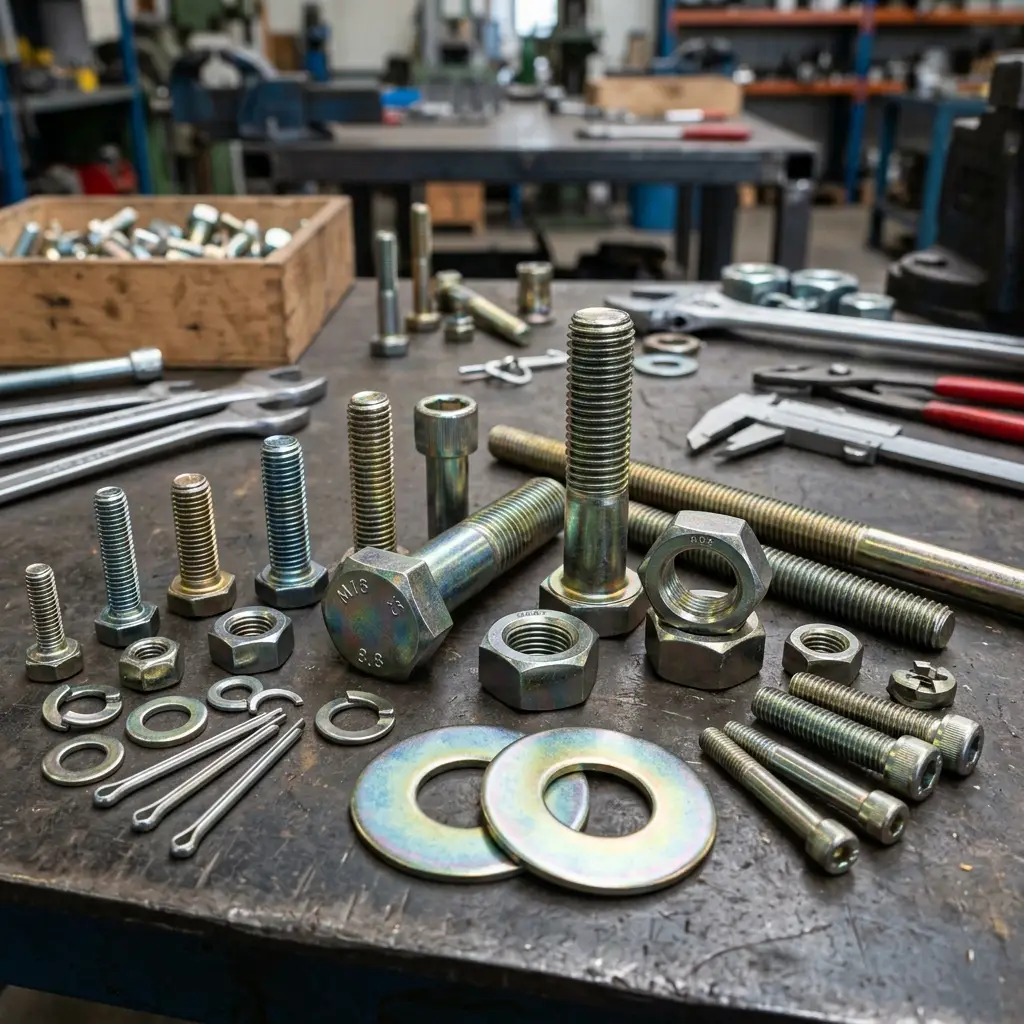
A manufacturer receives a batch of freshly zinc-plated steel brackets. They look perfect: bright, shiny, and flawless. The brackets are packed into cardboard boxes and stored in a warehouse. Three weeks later, the boxes are opened for assembly, and the parts are covered in a powdery, chalky white substance. The zinc coating is dull, stained, and partially consumed.
The manufacturer blames the plating supplier for a “bad batch.” The plating supplier blames the manufacturer for “bad storage.”
This scenario plays out daily in supply chains around the world. The culprit is White Rust (technically, Zinc Hydroxide), and understanding how it forms is the key to preventing it.
The Chemistry of White Rust
Zinc protects steel by being a sacrificial metal; it is highly reactive and oxidizes more readily than iron.
Under normal, healthy conditions in the open atmosphere, zinc reacts with oxygen and moisture to form Zinc Hydroxide [Zn(OH)₂]. This hydroxide then reacts with Carbon Dioxide (CO₂) in the air to form a thin, dense, tightly-adhering layer of Zinc Carbonate [ZnCO₃]. This zinc carbonate layer is passive; it acts as a barrier, slowing down further corrosion of the zinc underneath. This is how zinc plating is supposed to work.
When Things Go Wrong
White rust occurs when the newly plated zinc is exposed to moisture (H₂O) but is deprived of Carbon Dioxide (CO₂).
Without CO₂ to convert the zinc hydroxide into a passive carbonate layer, the zinc hydroxide continues to form unchecked. It grows as a bulky, powdery, unprotective white substance. This rapid, localized corrosion can consume the entire zinc layer in a matter of weeks, eventually exposing the underlying steel to red rust.
The Perfect Storm: Causes of White Rust
White rust is almost always a result of poor storage and packaging conditions. It requires two elements: moisture and a lack of freely circulating air.
1. Condensation (The “Sweating” Effect)
If cold metal parts are moved into a warm, humid warehouse, moisture in the air condenses directly onto the cold metal surfaces. This creates a microscopic pool of water on the zinc.
2. Poor Packaging Materials
- Corrugated Cardboard: Cardboard is highly hygroscopic (it absorbs moisture from the air). If parts are packed in cardboard in a humid environment, the cardboard acts like a wet sponge resting against the zinc. Furthermore, standard cardboard often contains trace acids or chlorides from the manufacturing process that aggressively attack zinc.
- Unvented Plastic Bags: Sealing parts in plastic bags while they are still warm from the plating shop, or sealing them in high humidity, traps moisture inside. As temperatures fluctuate, it “rains” inside the bag.
3. Nesting / Close Packing
When flat parts (like washers or sheet metal stampings) are stacked tightly together, moisture gets drawn between the parts via capillary action. Because they are tightly nested, air (and CO₂) cannot reach the surfaces to form the protective zinc carbonate layer. White rust will form rapidly between the nested faces.
Prevention: The Plater’s Responsibility
While storage is the primary cause, the plating facility plays a critical role in delaying the onset of white rust.
1. Proper Passivation (Chromating)
Fresh zinc is highly reactive. It must be sealed immediately. A chromate conversion coating (passivation)—whether clear, yellow, or black—is applied over the zinc. This layer acts as a chemical barrier, significantly delaying the zinc’s reaction with moisture.
- Trivalent (RoHS Compliant) Passivates are standard today. A well-applied thick-film trivalent passivate can resist white rust for 96 to 120+ hours in a harsh salt spray chamber.
2. Thorough Drying
Parts must be completely, bone-dry before they are packed. If parts are unloaded from the plating line and thrown into a bin while still retaining rinse water in blind holes or threads, white rust is guaranteed. Centrifugal dryers or hot air blowers are essential.
3. Topcoats and Sealers
For environments known to be harsh, or for parts heading into long sea-freight transit, a plater can apply a final silicate or organic sealer over the passivation. This drastically improves resistance to white rust.
Prevention: The Manufacturer’s Responsibility
Once the parts leave the plater, their survival depends entirely on the supply chain and storage protocols.
1. Climate Control
Store plated parts in a dry, well-ventilated environment. Keep the temperature stable to prevent the condensation cycle. Relative humidity should be kept below 60%.
2. VCI Packaging (Volatile Corrosion Inhibitors)
This is the ultimate defense against storage corrosion. VCI packaging (usually a specialized plastic bag or chemically treated paper) releases corrosion-inhibiting vapors into the enclosed airspace. These vapors condense onto the metal surfaces, forming a molecular barrier that repels moisture and stops oxidation. If parts must be stored for months or shipped overseas, VCI packaging is mandatory.
3. Desiccants
If sealing parts in plastic, include a silica gel desiccant pack to absorb any ambient moisture trapped inside during packing.
4. Airflow
Do not store boxes directly on a concrete floor (which holds moisture and remains cold). Use pallets to allow air circulation underneath the loads.
Can White Rust Be Removed?
If white rust has already formed, can the parts be saved?
- Light, Powdery Dusting: If the white rust is very light and easily brushes off, the structural integrity of the zinc is likely intact. It can often be removed by brushing with a stiff nylon brush or wiping with a mild, non-acidic cleaner (like a weak solution of white vinegar and water), followed immediately by a thorough water rinse and complete drying.
- Heavy, Crusty Buildup: If the white rust has formed thick, hard crusts or dark stains, the zinc coating has been significantly consumed. The part’s corrosion protection is compromised. These parts must be sent back to the plater to be chemically stripped and completely re-plated.
At Platinex Industries, we utilize advanced trivalent passivations and top-tier drying protocols to ensure your parts leave our facility fully protected. If you have concerns about packaging or transit environments, contact our team to discuss VCI packaging and sealer options.