
Acid Copper Plating: Process, Chemistry, and Industrial Applications
A deep technical guide to acid copper electroplating — covering bath chemistry, current density, throwing power, and when to choose acid copper over alkaline copper for industrial components.
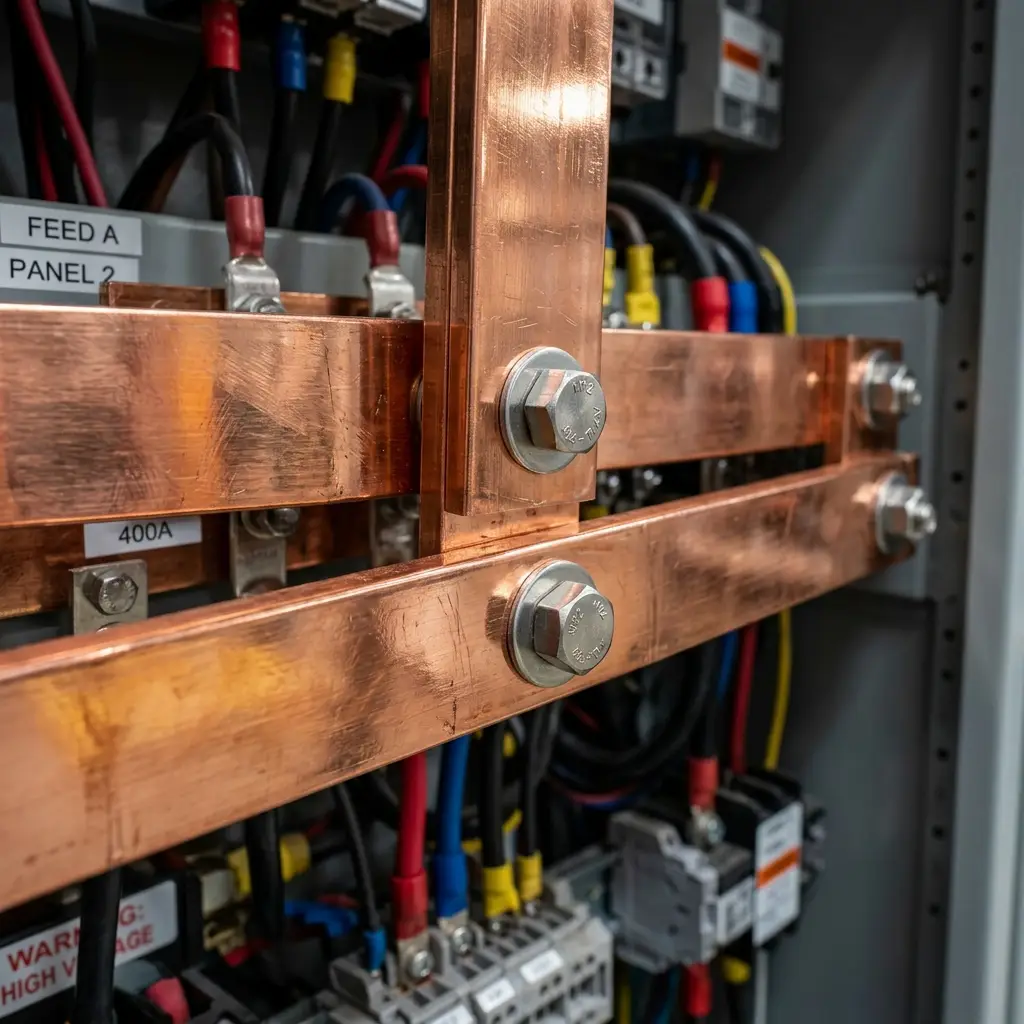
If you have ever held a perfectly smooth, mirror-bright copper-plated component and wondered how it got that way, the answer is almost certainly an acid copper sulfate bath. Of the two primary copper electroplating chemistries — alkaline (cyanide or pyrophosphate) and acid — the acid copper process is the workhorse of industrial electroplating. It delivers bright, ductile, levelled deposits at high plating speeds, making it the default choice for a wide range of engineering applications.
This guide breaks down the acid copper plating process from first principles: how the bath works, what controls deposit quality, where it excels, and where its limitations force you to consider alternatives.
What Is Acid Copper Plating?
Acid copper plating is an electrodeposition process that uses a copper sulfate (CuSO₄·5H₂O) electrolyte, combined with sulfuric acid (H₂SO₄), to deposit metallic copper onto a substrate. Unlike alkaline copper baths which rely on complex ions, acid copper operates with simple Cu²⁺ ions in solution, making it inherently efficient and fast.
The core electrochemical reaction at the cathode (your part) is straightforward:
Cu²⁺ + 2e⁻ → Cu⁰
At the anode (typically phosphorized copper), the reverse occurs:
Cu⁰ → Cu²⁺ + 2e⁻
This near-perfect soluble anode system means copper ions consumed at the cathode are continuously replenished from the anode, keeping bath chemistry remarkably stable in production environments.
Acid Copper Bath Chemistry: The Key Variables
A modern acid copper plating bath is more than just copper sulfate and sulfuric acid. The chemistry is finely tuned with organic additives that control grain structure, brightness, and levelling.
Core Components
| Component | Typical Range | Function |
|---|---|---|
| Copper Sulfate (CuSO₄·5H₂O) | 175–250 g/L | Primary copper ion source |
| Sulfuric Acid (H₂SO₄) | 50–80 g/L | Conductivity and pH control |
| Chloride (Cl⁻) | 60–120 mg/L | Anode activation and additive synergy |
| Brighteners | 1–10 mL/L | Grain refinement, surface levelling |
| Carriers (Polyethylene Glycol) | 1–5 mL/L | Controls additive co-deposition |
| Suppressors | 0.5–3 mL/L | Reduces grain size, improves ductility |
Why Chloride Matters
Chloride ions are often overlooked but are critical. At the anode surface, chloride forms a thin film that prevents passivation (the formation of non-conducting copper oxide/sulfate films). Without adequate chloride, anodes polarise, current drops, and your bath effectively stops working. At the cathode, chloride synergises with brighteners to produce the fine grain structure that gives bright copper its characteristic mirror finish.
Too little chloride → anode passivation, rough deposits. Too much chloride → pitting, dark deposits, additive breakdown.
Maintaining chloride in the 60–120 mg/L range is non-negotiable.
Process Conditions
Current Density
Acid copper is forgiving across a wide current density range:
| Application | Current Density (ASD) | Result |
|---|---|---|
| Rack plating (complex parts) | 1–3 A/dm² | Bright, levelled deposits |
| Barrel plating (hardware) | 0.3–1 A/dm² | Semi-bright, functional deposits |
| High-speed plating (flat surfaces) | 5–15 A/dm² | Fast buildup, may need agitation |
| Continuous strip plating | 20–80 A/dm² | Industrial wire and strip production |
Temperature
Operating at 20–30°C is standard for most installations. Higher temperatures increase conductivity and plating speed but can accelerate additive breakdown and increase the risk of burning at high current density areas. Most production shops run a glycol chiller on their acid copper tanks to maintain tight temperature control.
Agitation
Air agitation or mechanical cathode rod movement is essential. Without agitation, the diffusion layer at the cathode surface becomes depleted in Cu²⁺ ions, leading to burnt, dark, or powdery deposits. Good agitation allows you to push current density higher while maintaining deposit quality.
The Role of Organic Additives
This is where acid copper plating becomes both an art and a science. The organic additive system — typically a proprietary three-component package from a chemical supplier — is responsible for:
-
Brightening: Accelerator molecules (often sulfur-containing compounds like SPS — bis(3-sulfopropyl) disulfide) adsorb at high-current-density areas (edges, protrusions) and create the mirror-like finish.
-
Levelling: Suppressors and carriers adsorb preferentially at recesses and low-current-density areas, slowing deposition there, which fills in scratches and machining marks and produces a genuinely smooth surface.
-
Grain Refinement: The combined additive system forces copper to deposit in a fine-grained, equiaxed crystal structure rather than the coarse, columnar grains you would get from an additive-free bath.
Additive concentration control is critical. Most modern plating operations use Hull Cell testing and controlled addition systems (pump dosing based on amp-hours consumed) to maintain additives within specification. Running low on brighteners produces hazy, non-bright deposits. Running too high causes brittle, stressed deposits that may crack or peel, especially when the part is bent or thermally cycled.
Throwing Power and Its Limitations
This is the most important practical limitation of acid copper you must understand before specifying it.
Throwing power is a measure of a plating bath’s ability to deposit metal uniformly across a complex-shaped cathode — specifically, its ability to plate into recesses, blind holes, and low-current-density zones.
Acid copper sulfate has poor throwing power compared to alkaline copper chemistries. This is a direct consequence of its chemistry: the high ionic concentration and low operating voltage mean current takes the path of least resistance — the high points and exposed surfaces — and avoids deep recesses.
Practical Implications
| Part Feature | Acid Copper Result |
|---|---|
| Flat surfaces, simple shapes | Excellent — uniform, bright |
| Gentle bends and curves | Good — minor edge buildup |
| Deep blind holes (aspect ratio > 1:1) | Poor — thin or bare in recesses |
| Internal threads | Poor — inadequate coverage |
| Complex castings | Marginal — needs careful rack design |
Rule of Thumb: If your part has any blind holes deeper than their diameter, do not rely on acid copper for uniform coverage in those holes. You will need an electroless copper or alkaline copper strike layer first.
When to Use Acid Copper vs Alkaline Copper
| Selection Criterion | Acid Copper | Alkaline (Cyanide/Pyrophosphate) Copper |
|---|---|---|
| Deposit brightness | Excellent | Good to excellent |
| Throwing power | Poor | Superior |
| Plating speed | Fast (high CD) | Slow to moderate |
| Adhesion to steel directly | Poor — must use strike | Excellent |
| Adhesion to zinc die cast | Very poor | Good with process control |
| Bath control complexity | Moderate (additive management) | High (cyanide control, ventilation) |
| Environmental/safety | Much safer — no cyanide | Significant hazard — cyanide waste |
| Cost | Low | Higher (waste treatment, PPE) |
The standard industrial approach: Use alkaline copper or copper cyanide as a strike layer (1–3 µm) to establish adhesion on steel or difficult substrates, then switch to acid copper for the bulk of the build-up where brightness and levelling are required. This gives you the best of both chemistries.
Primary Applications at Platinex
At our Nashik MIDC facility, we use acid copper plating extensively for:
- Electrical Bus Bars and Conductors: 8–20 µm copper build-up on aluminium or steel bus bars, followed by tin or silver plating, for switchgear and power distribution panels
- PCB Copper Base Layers: Strike copper on ferrous components that will be exposed to soldering operations
- Pre-Nickel Undercoat: 3–5 µm acid copper as a levelling and stress-reduction layer before bright nickel plating on decorative components
- Multi-Layer Stack Bottoms: First copper layer in Cu → Ni → Cr decorative plating stacks
Frequently Asked Questions
Can you plate acid copper directly on steel? No. Acid copper will not adhere directly to steel. The copper ions are immediately displaced by an immersion reaction with iron (Fe → Fe²⁺, Cu²⁺ → Cu⁰), producing a loose, powdery, non-adherent copper layer. You must always apply a nickel strike, copper cyanide strike, or activation treatment before acid copper on ferrous substrates.
What causes burning in acid copper plating? Burning (dark, rough deposits) at high-current-density areas is caused by local depletion of Cu²⁺ ions faster than diffusion can replenish them. Solutions: increase agitation, lower current density, increase copper sulfate concentration, or improve rack design to reduce current density variation.
How do I control copper sulfate concentration? Through Atomic Absorption Spectroscopy (AAS) or simple titration analysis. Titration using sodium thiosulfate after iodometric oxidation is a standard lab method used in production plating shops. Target: 175–250 g/L CuSO₄·5H₂O.
What is the minimum thickness for corrosion protection? Copper alone is not a corrosion-protective coating — it corrodes (oxidises) in air and accelerates galvanic corrosion on steel. It is always used as an intermediate layer. For corrosion protection, the outer layer (zinc, nickel, tin, or silver) provides the barrier.
How long does an acid copper bath last? A well-maintained acid copper bath can last for years. Unlike some baths, the main chemicals are not consumed irreversibly — copper is replenished from the anodes, and the acid concentration is checked weekly. Organic additive build-up (breakdown products) is the main long-term issue, typically addressed with activated carbon treatment every 6–12 months.
Need copper plating for your electrical components or precision parts in Nashik? Contact the Platinex engineering team for specifications and a fast quote.