
Acid Chloride Zinc Plating: Speed, Brightness, and When to Use It
A technical guide to acid chloride zinc plating. Understand its superior brightness, high plating speed, and direct plating capabilities onto cast iron, contrasted with its throwing power limitations.
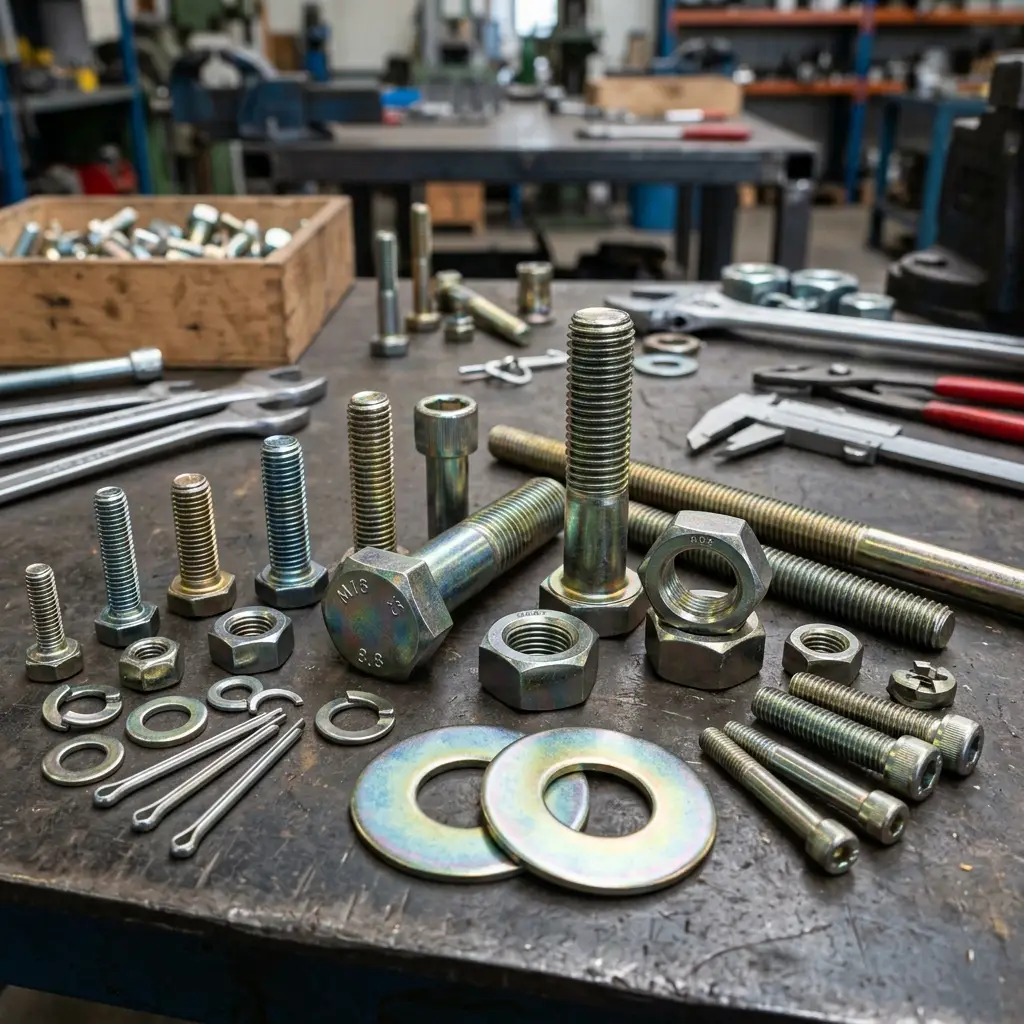
When aesthetics and production speed are paramount, and the geometry of the part allows for it, Acid Chloride Zinc plating is the reigning champion of the zinc plating world.
While Alkaline Zinc (discussed in a previous article) is specified for its superior throwing power on complex geometries, Acid Zinc is loved for its brilliant, chrome-like appearance and its incredibly high current efficiency.
This guide explores the chemistry, the advantages, and the strict limitations of the acid chloride zinc electroplating process.
The Chemistry of Acid Chloride Zinc
The modern acid zinc bath is built around either potassium chloride (KCl) or ammonium chloride (NH₄Cl), though potassium-based baths dominate today due to easier wastewater treatment (ammonia complicates heavy metal precipitation).
A typical Potassium Chloride Zinc bath contains:
| Component | Concentration | Function |
|---|---|---|
| Zinc Metal (from Zinc Chloride) | 25 – 40 g/L | The source of zinc ions |
| Potassium Chloride (KCl) | 130 – 150 g/L | Provides electrical conductivity |
| Boric Acid (H₃BO₃) | 25 – 35 g/L | pH Buffer (keeps pH between 4.5 – 5.5) |
| Wetting Agents (Surfactants) | Variable | Lowers surface tension, solubilizes brighteners |
| Primary / Secondary Brighteners | Variable | Refines grain structure, produces extreme brightness |
The Power of High Efficiency
The defining characteristic of an acid zinc bath is its cathode current efficiency, which sits at 95% to 98%.
In an alkaline zinc bath (efficiency ~60-70%), a significant portion of the electrical energy is wasted splitting water to create hydrogen gas. In an acid zinc bath, almost all the electrical current goes directly toward depositing zinc metal. This means acid zinc plates much faster—saving critical processing time on high-volume production lines.
Advantages of Acid Chloride Zinc
1. Brilliant, Chrome-Like Appearance
With the right brightener package, acid zinc produces a leveled, brilliantly shiny deposit that can rival decorative chrome in appearance. It is highly desirable for consumer-facing hardware, tools, and automotive brackets where aesthetics are a selling point.
2. High Plating Speed
Because of the 95%+ efficiency, parts spend less time in the tank to achieve the required thickness. This increases line throughput and lowers the cost per piece.
3. Plating on Difficult Substrates (Cast Iron)
Cast iron, high-carbon steel, and heat-treated steels are notoriously difficult to plate in alkaline or cyanide zinc baths because these substrates have low “hydrogen overvoltage” (they prefer to generate hydrogen gas rather than accept zinc). Acid zinc overcomes this easily. It plates readily and directly onto cast iron brake calipers, steering knuckles, and hardened high-carbon washers without requiring a complex “strike” layer.
4. Lower Hydrogen Embrittlement Risk
Because the bath generates very little hydrogen gas at the part surface (due to the high current efficiency), less atomic hydrogen is available to diffuse into high-strength steel. While post-plate baking is still required for high-strength fasteners (> 32 HRC), the starting risk level is lower than with alkaline baths.
The Achilles Heel: Poor Throwing Power
If acid zinc is fast, bright, and easy to plate on cast iron, why isn’t it used for everything? The answer is Throwing Power.
Acid zinc has relatively poor throwing power compared to alkaline zinc. Electricity follows the path of least resistance. In the acid bath, the current rushes to the high-current-density areas (edges, corners, outside surfaces) and largely ignores the low-current-density areas (deep recesses, blind holes, internal threads).
If you plate a complex, cup-shaped stamping in acid zinc:
- The outer edges might receive 15 µm of zinc.
- The inside corners and bottom of the cup might receive 2 µm of zinc (or nothing at all).
This massive thickness variation means the part will pass visual inspection but fail salt spray corrosion testing rapidly because the deep recesses are unprotected.
Furthermore, the plating bath itself is highly corrosive (due to the chlorides). If plating solution gets trapped in a blind hole or a spot-welded seam where it cannot be rinsed out perfectly, it will bleed out later and aggressively corrode the part from the inside out.
When to Specify Acid Chloride Zinc
The decision to use Acid Zinc relies entirely on understanding the geometry of the part.
Specify Acid Zinc For:
- Fasteners (bolts, screws, nuts) processed in barrels where high throughput is critical.
- Flat stampings, brackets, and wire forms with simple geometries.
- Cast iron components (brake calipers, pump housings).
- High-carbon or heat-treated steel parts.
- Parts where a brilliant, highly decorative cosmetic finish is required.
Avoid Acid Zinc For:
- Complex geometries with deep blind holes or internal cavities.
- Tubular parts or assemblies with spot-welded seams that can trap solution.
- Parts requiring perfectly uniform thickness across the entire geometry. (Specify Alkaline Zinc instead).
At Platinex Industries, we maintain both alkaline and acid zinc plating lines to ensure we can match the exact chemical process to your part’s geometry and performance requirements. Contact our engineering team to determine which process is right for your product.