
Bright Nickel Plating for Decorative and Functional Finishes
Understand the bright nickel plating process, bath chemistry, and why it remains the foundation for decorative chrome and premium hardware finishes.
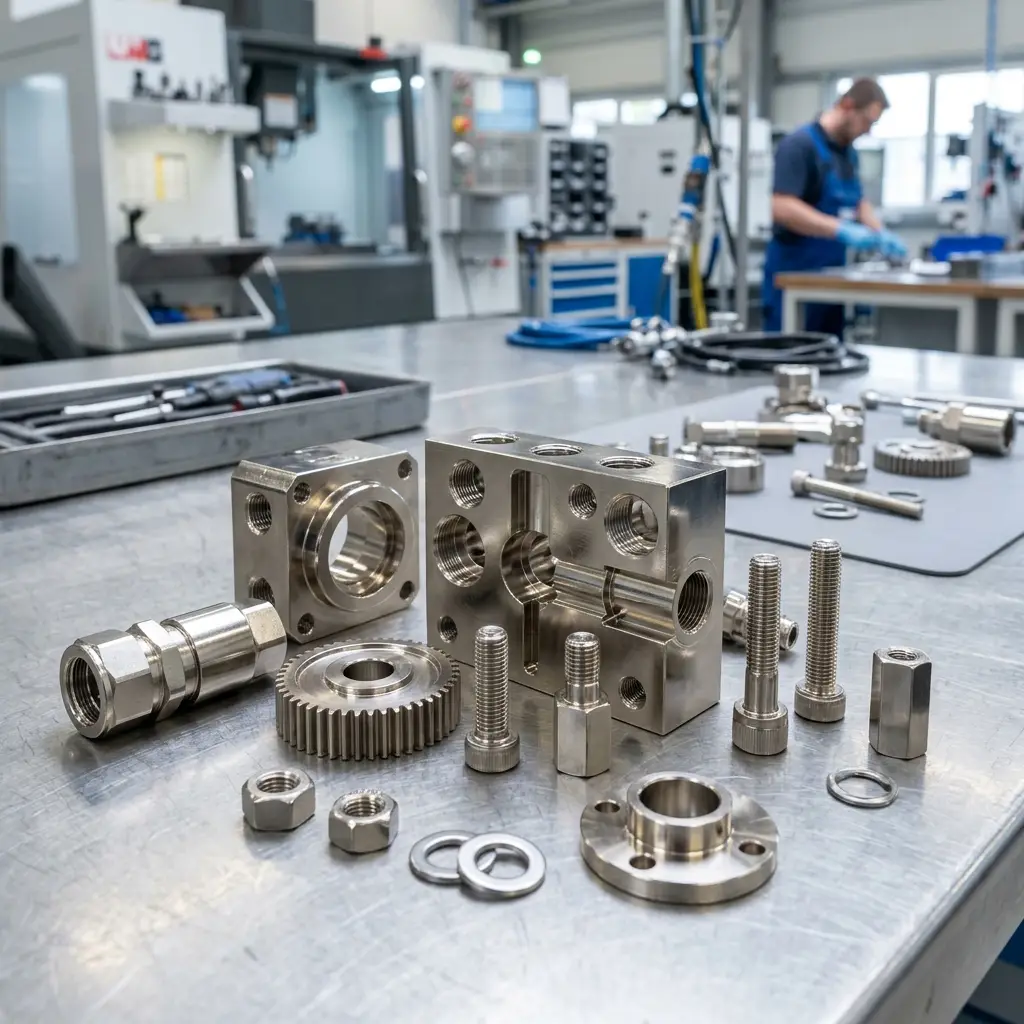
When consumers think of “chrome,” they are almost always looking at bright nickel. In a standard decorative chrome finish (like a motorcycle exhaust or bathroom fixture), the brilliant, mirror-like shine comes entirely from the thick layer of bright nickel underneath. The actual chromium layer on top is merely a translucent, bluish-white flash coat (typically less than 0.5 µm thick) applied to prevent the nickel from tarnishing.
Bright nickel plating is the cornerstone of the decorative finishing industry, but it also serves critical functional roles in engineering applications. This guide explains how the process works, the chemistry behind the shine, and how to specify it correctly.
The Watts Nickel Bath
Almost all bright nickel plating is performed using a modified Watts Bath, named after Oliver P. Watts who developed the formulation in 1916. A modern bright Watts bath contains three primary inorganic chemicals and a sophisticated package of organic additives.
Inorganic Components
| Component | Typical Concentration | Function |
|---|---|---|
| Nickel Sulfate (NiSO₄) | 250 - 350 g/L | The primary source of nickel ions. |
| Nickel Chloride (NiCl₂) | 40 - 80 g/L | Promotes anode dissolution and increases bath conductivity. |
| Boric Acid (H₃BO₃) | 35 - 50 g/L | Acts as a pH buffer, keeping the bath stable at pH 4.0 - 4.5. |
The Secret to the Shine: Organic Additives
A basic Watts bath produces a dull, matte, grey deposit. To achieve a mirror finish, proprietary organic additives are strictly maintained:
- Carrier Brighteners (Primary): These compounds (often containing sulfur, like saccharin) refine the grain structure of the deposited nickel. They reduce internal stress in the plating, preventing it from cracking.
- Levelers (Secondary Brighteners): These are the true “brighteners.” They temporarily adsorb onto the high-current microscopic peaks of the metal surface, forcing the nickel to deposit in the microscopic valleys. This “leveling” action smooths out polishing lines and substrate imperfections, creating a glass-like surface.
- Wetting Agents (Anti-pit): These surfactants lower the surface tension of the bath, allowing hydrogen gas bubbles to detach from the part rather than sticking and causing “pits” in the plating.
Functional Properties of Bright Nickel
While aesthetics are the primary driver, bright nickel possesses engineering properties that make it a functional choice as well.
1. Hardness and Wear Resistance
Bright nickel is significantly harder than standard matte nickel or copper. It typically measures between 400 and 500 HV (Vickers Hardness). This provides moderate wear resistance, making it suitable for hand tools, levers, and fasteners that see frequent handling but not high-abrasion environments.
2. Leveling Power
The leveling ability of a modern bright nickel bath is extraordinary. It can take a steel stamping with a relatively rough 1.0 µm Ra surface finish and, with 20 µm of bright nickel plating, level it down to a near-mirror 0.1 µm Ra finish. This saves immense amounts of money that would otherwise be spent on mechanical buffing and polishing before plating.
3. Solderability and Brazing
Bright nickel can be soldered, though it requires more aggressive acidic fluxes compared to tin or matte nickel. The organic brighteners co-deposited in the layer can sometimes interfere with high-temperature brazing; if brazing is required, dull (sulfamate) nickel is preferred.
Limitations and Design Considerations
Internal Stress
The organic brighteners used to create the shine co-deposit sulfur into the nickel matrix. This makes bright nickel inherently more brittle and highly stressed than matte nickel.
- Design Rule: If a part must be crimped, bent, or deformed after plating, do not specify bright nickel. It will crack and flake. Specify matte or semi-bright nickel, which are highly ductile.
Throwing Power
The Watts bath has moderate throwing power—better than acid copper or hard chrome, but significantly worse than alkaline zinc or electroless nickel. Deep blind holes will not plate internally.
Corrosion Resistance (The Duplex Solution)
Nickel is a barrier coating, not a sacrificial coating like zinc. If the nickel layer is scratched down to the steel, the steel will rust rapidly (galvanic acceleration). Furthermore, the sulfur in bright nickel makes it more chemically active (prone to corrosion) than pure matte nickel. For severe outdoor environments (like automotive bumpers), a Duplex Nickel system is specified:
- A thick layer of sulfur-free Semi-Bright Nickel is applied first for ductility and corrosion resistance.
- A thinner layer of Bright Nickel is applied on top for the mirror finish. If corrosion attacks the surface, it spreads laterally through the active bright nickel layer rather than penetrating downward through the noble semi-bright layer to the steel.
Specifications and Thickness
For general hardware and decorative applications, bright nickel is usually specified without a chrome topcoat.
| Service Condition | Environment | Recommended Minimum Thickness |
|---|---|---|
| Mild | Indoors, warm, dry (furniture, wire goods) | 5 - 10 µm |
| Moderate | Indoors, subject to handling or condensation (bathroom hardware) | 10 - 20 µm |
| Severe | Outdoors, occasional rain (bicycles, hand tools) | 25 - 40 µm |
Note: For steel parts facing severe environments, an initial layer of Acid Copper (10-15 µm) is often applied under the nickel to improve corrosion resistance and leveling.
At Platinex Industries, our bright nickel lines are chemically optimized for maximum leveling and brightness, reducing your need for expensive mechanical pre-polishing. Contact our team to discuss your finishing requirements.